
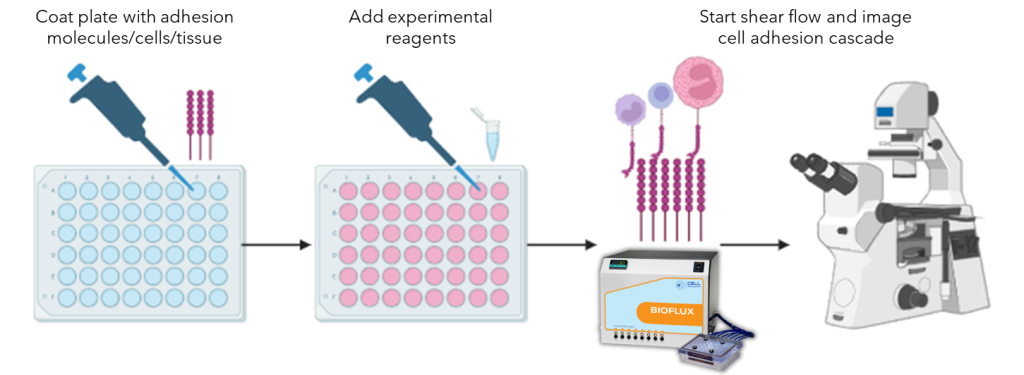

The leukocyte adhesion cascade consists of capture, rolling, slow rolling, arrest, strengthening/spreading, and transmigration. Typically, analyses of these steps require at least 3 separate systems and/or assays.
BioFlux shear flow systems enable the visualization and analysis of all of the steps of the leukocyte adhesion cascade under physiological/pathological shear flow using one system.
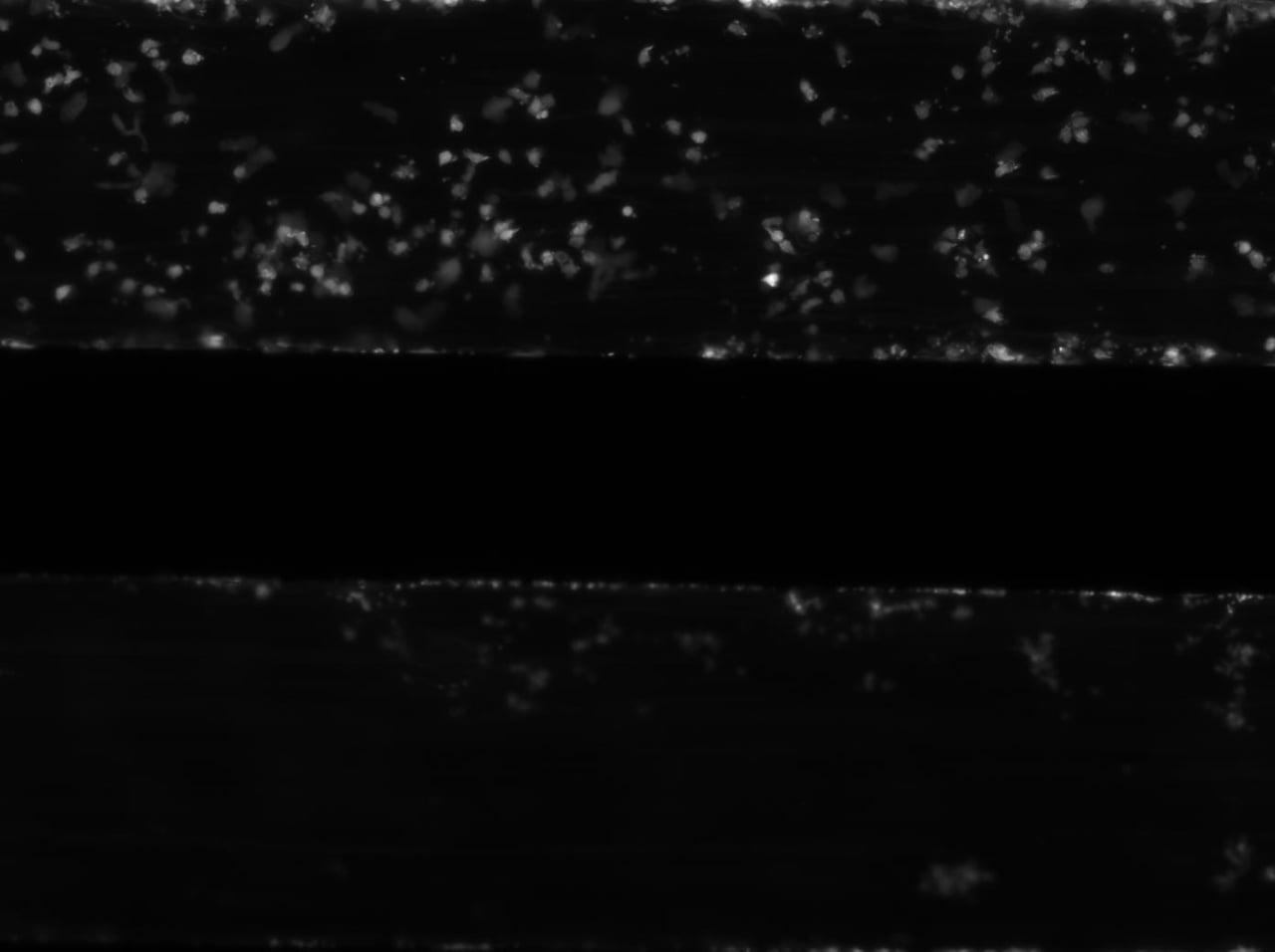
The top channel shows the inhibition of neutrophil adhesion by recombinant human vimentin. The bottom channel shows neutrophil adhesion under control conditions.
Neutrophil rolling on endothelial cells under shear flow. Scale bar = 50 µm
Tracking of the transmigration of CMTMR stained wild-type T cells (red) and CFSE stained ERM-deficient T cells (green) through TNF-α treated 3B-11 endothelial cells.