Adhesion Strength
The adhesion of planktonic microbes and their subsequent development into biofilms is dependent upon several factors, including shear stress, nutrient availability, and the composition of the attachment surface. Examination of the microbial adhesion and growth processes enables the investigation of antibiofilm and antimicrobial surface treatments.
BioFlux shear flow systems enable high-throughput visualization and analysis of all the steps of microbial adhesion and growth. Controlled shear flow can be used to treat biofilms with antimicrobial compounds, biosurfactants, or other solutions that alter adhesion. Furthermore, the microfluidic channels of BioFlux plates can be coated with an antibiofilm treatment of interest or custom substrate plates can be leveraged for microbiology investigations.
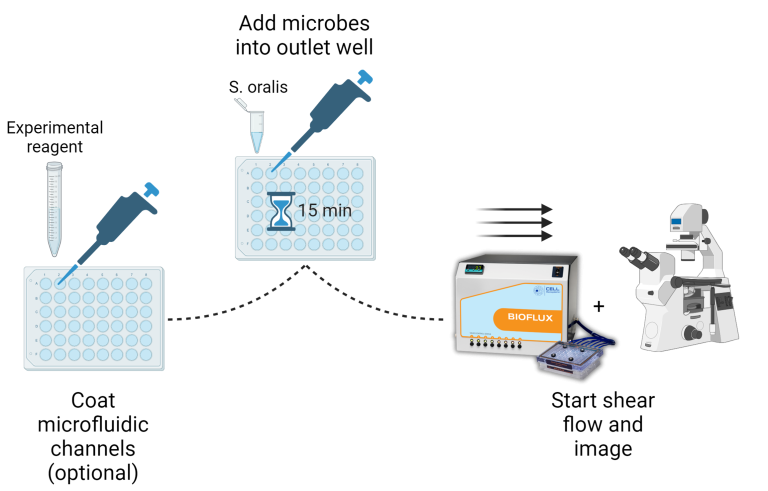
BioFlux microbial adhesion workflow
Biofilm adhesion using BioFlux
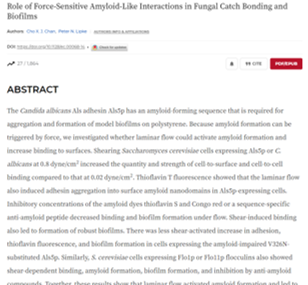
Role of Force-Sensitive Amyloid-Like Interactions in Fungal Catch Bonding and Biofilms
Real-time adhesion of Als5p-expressing Candida albicans cells under a shear flow rate of 0.8 dyn/cm².
High-Throughput Microfluidic Method To Study Biofilm Formation and Host-Pathogen Interactions in Pathogenic Escherichia coli
Time-lapse growth of Escherichia coli (strain EHEC EDL933) on HRT-18 monolayers in a BioFlux plate.
Publication spotlight: Role of Force-Sensitive Amyloid-Like Interactions in Fungal Catch Bonding and Biofilms
Key BioFlux Advantages For Adhesion Strength Studies
- Accurately control shear forces to quantify bacterial adhesion
- Microfluidic design allows for minimal media usage, contributing to longer experiments and more time for shear-enhanced flow analysis
- Use biosurfactants, antimicrobial compounds, etc. to inhibit biofilm formation and adherence under flow
- Perform binding assays and measure the binding specificity of microbial surface proteins in a microfluidic channel
Count Microbes With Confidence
CASY Cell Counter & Analyzer
Benefits of CASY for Microbiologists
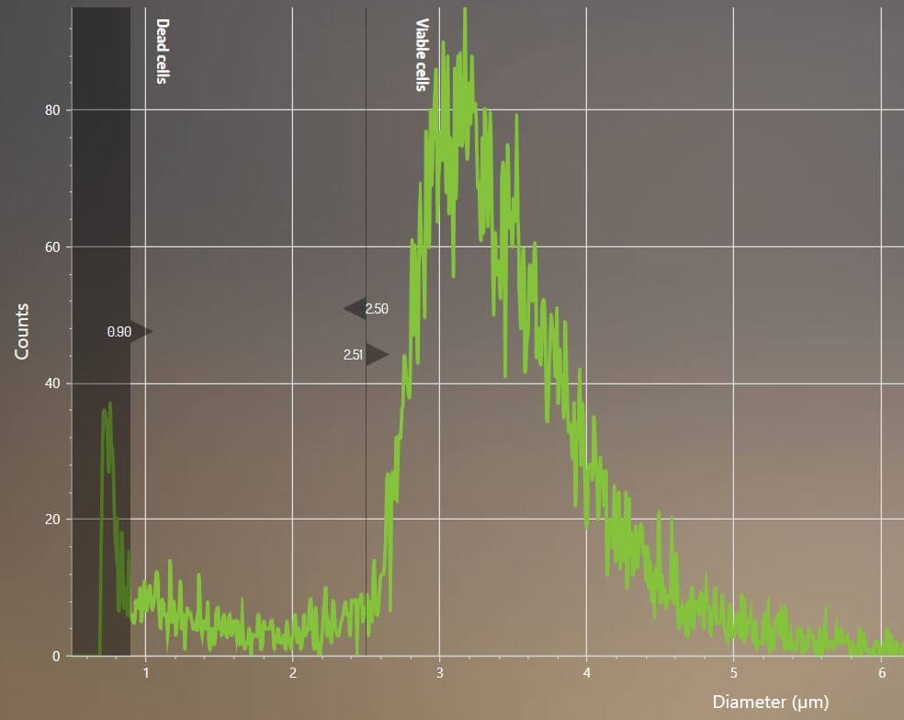
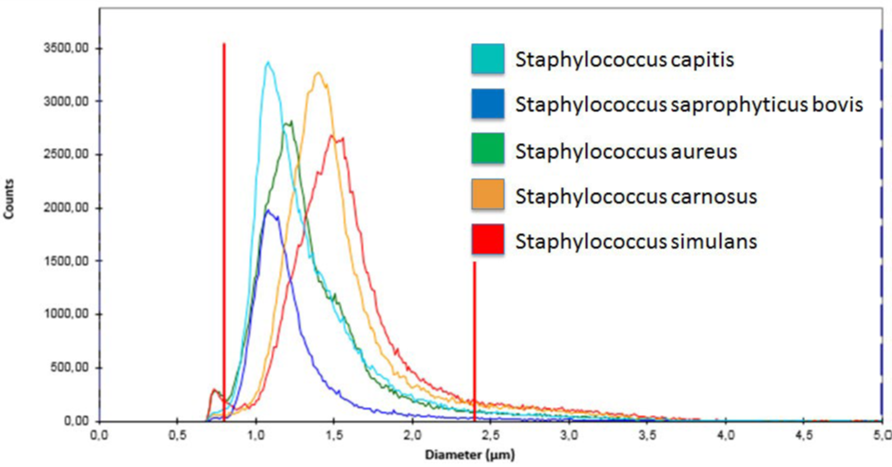
- Accurate mixed-species counting – Count up to 5 species of microbes from heterogeneous samples, all at once
- Count almost anything – A 0.7-120 µm measurement range provides unmatched counting flexibility
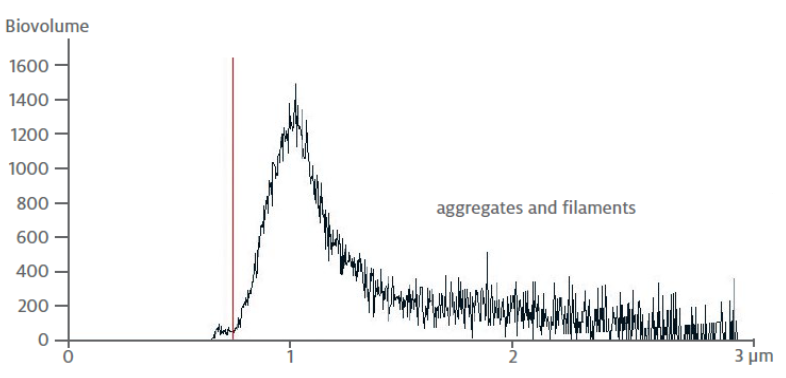
- Assess aggregation – Volume-based aggregation correction provides accurate aggregate counting and changes in the level of aggregation
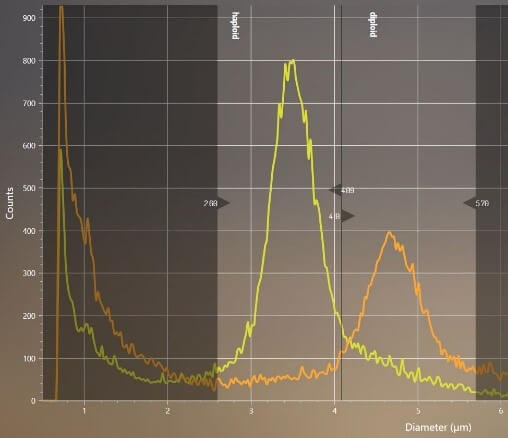
- Spore differentiation – Accurately discriminate between haploid and diploid spores
- Measure cells with flagella – 1 MHz detection enables precise volume-based size determination of elongated cells
- Biomass, proliferation, & biovolume all at once – Measure cell volume and counts simultaneously to monitor growth