Recording of Endogenous GABAA Channels
in Human Airway Smooth Muscle Cells
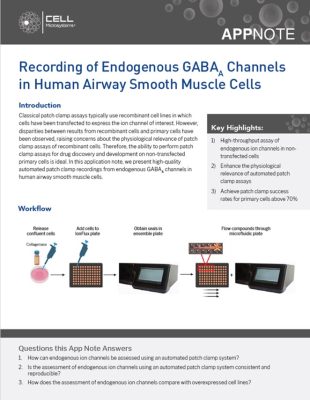
Download this application note to learn how an IonFlux automated patch clamp system was used to record currents elicited by GABAA activation in primary human airway smooth muscle cells.
Questions this application note answers:
How can endogenous ion channels be assessed using an automated patch clamp system?
Is the assessment of endogenous ion channels using an automated patch clamp system consistent and reproducible?
How does the assessment of endogenous ion channels compare with overexpressed cell lines?
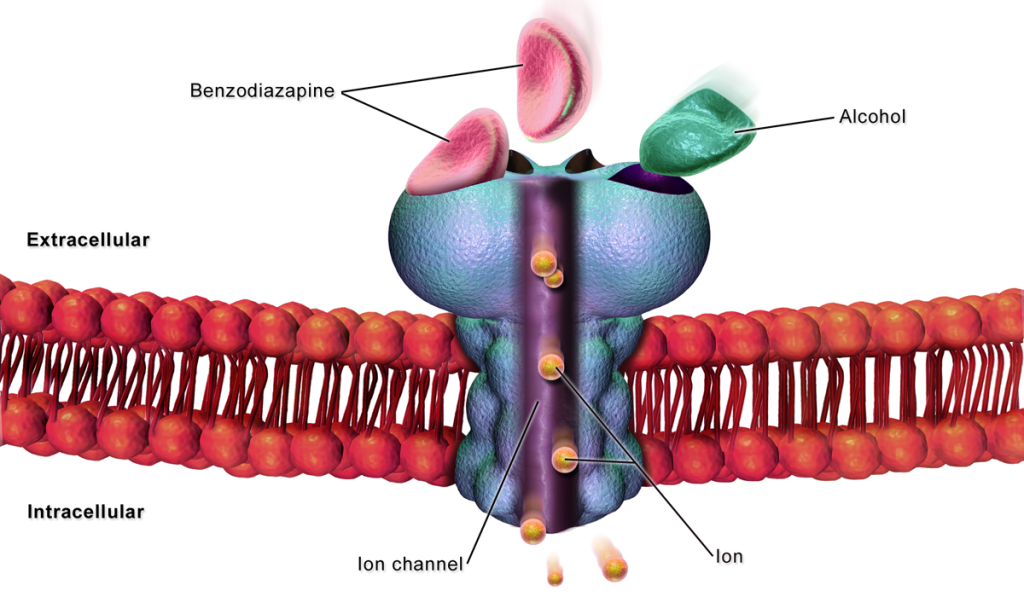
GABA (ɣ-aminobutyric acid) is the primary inhibitory neurotransmitter in the central nervous system. GABA receptors belong to a family of ligand gated ion channels mediating fast synaptic transmission. They are of major importance as pharmacological targets for anxiolytics (e.g. benzodiazepines), schizophrenia, and sleep aids. At least nineteen different individual GABA A receptor subunits assemble into pentameric structures in different combinations to form the native receptor ( α1-6, β1-3, ɣ1-3, δ, ρ1-3, plus minor subunits). When activated, these receptor/channels conduct a Cl- current that desensitizes at higher GABA concentrations, with a characteristic rate for different subunit combinations. Receptors containing α1-5 subunits, any β subunits, and the ɣ2 subunit are the most prevalent in the brain. These receptors are sensitive to benzodiazepine modulation. The search for subtype-selective drugs for GABA A channels has been hampered by the lack of suitable high throughput electrophysiology platforms with the ability to interrogate ligand gated channels.
IonFlux Mercury is the recognized gold standard for GABA A screening.
Cell GABA Receptor
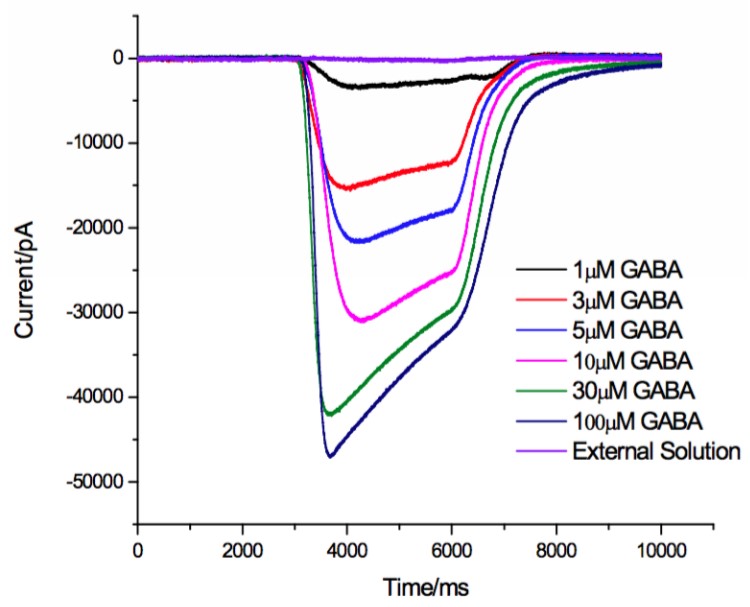
Inward Cl- current from one ensemble of cells exposed to GABA with increasing concentrations (1μM to 100μM)
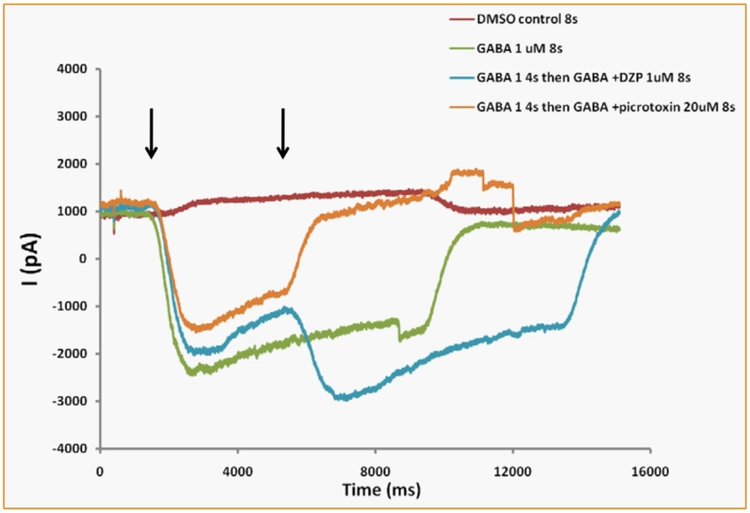
Rapid change of solutions during GABA current activation sweeps.
Features include:
Continuous flow of solutions prolongs the length and stability of recordings
In-plate exchange of solution enables parallel and fast exchange of solutions
No dependence on intra-assay liquid handling; eliminates pipetting noise and enables solution exchange during recording
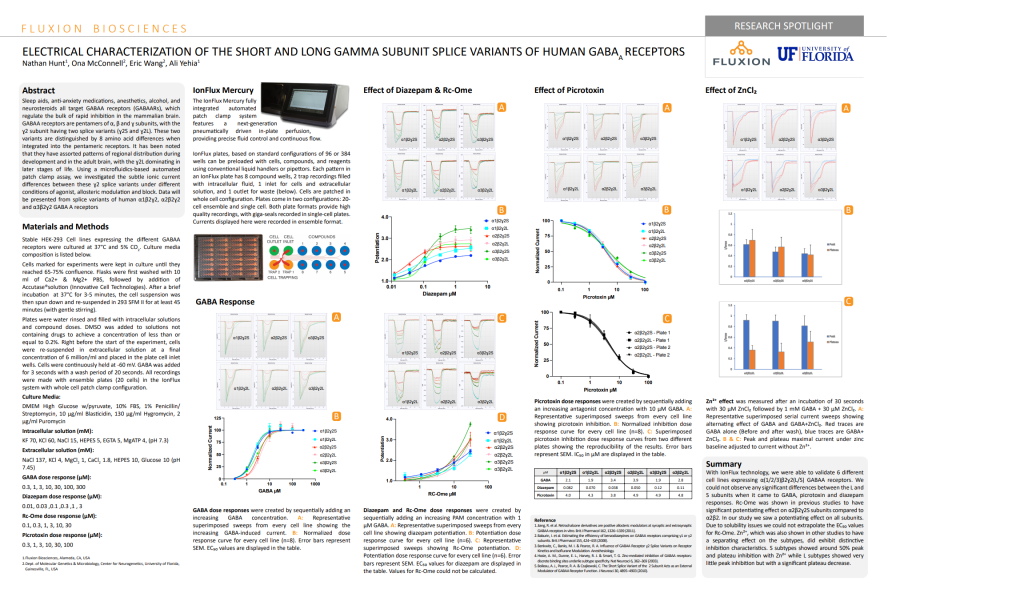
Featured Poster
Electrical Characterization Of The Short And Long Gamma Subunit Splice Variants Of Human GABAA Receptors
GABAA receptors, targeted by sleep aids, anti-anxiety medications, anesthetics, alcohol, and neurosteroids, regulate rapid inhibition in the mammalian brain. These receptors consist of α, β, and γ subunits, with the γ2 subunit having two splice variants γ2S and γ2L), distinguished by 8 amino acid differences. The γ2L variant dominates in later stages of life, with assorted patterns of regional distribution. IonFlux Mercury was used to investigate any the subtle ionic current differences between these γ2 splice variants under different conditions.