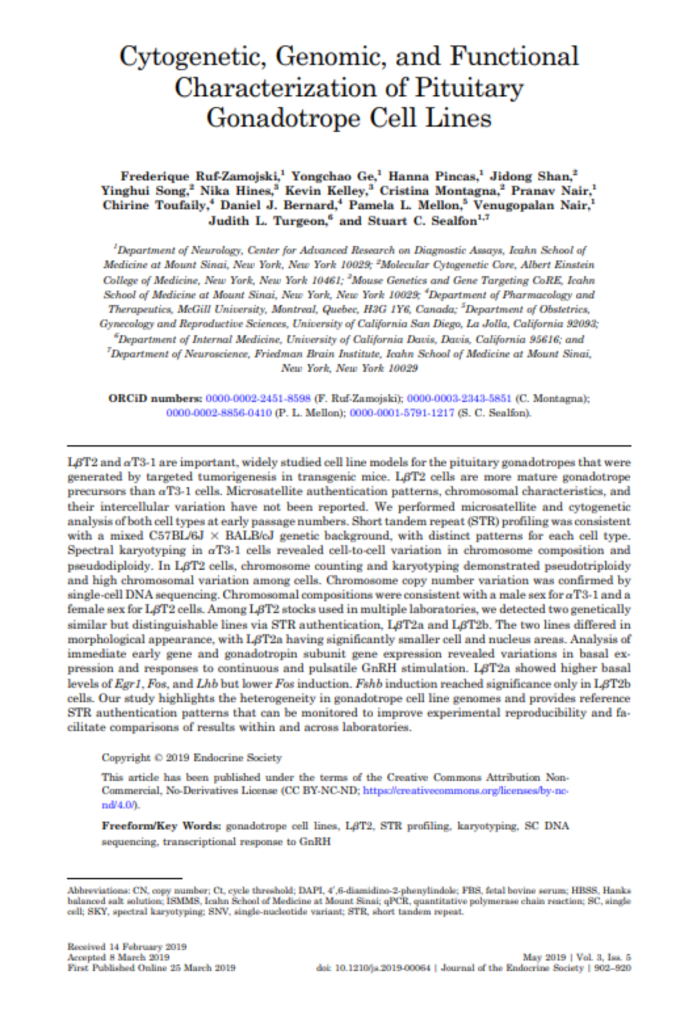
Production of gonadotropins, such as follicle-stimulating hormone (FSH) and gonadotropin-releasing hormone (GnRH), are essential for reproductive health and hormonal balance. The mouse cell line models for tumorigenic pituitary gonhivadotropes, LβT2 cells and αT3-1 cells, have been extensively used to study endocrine signaling and developmental processes. To access the genetic background and potential drifting between cells of an early passage and lines from different laboratory stocks, single-cell DNA sequencing including microsatellite and short tandem repeat (STR) profiling was conducted. The CellRaft picking system was used to successfully isolate monoclonal cells for this downstream DNA amplification. Genomic sequencing and karyotyping revealed chromosomal heterogeneity between cells derived from an early passage in both lines. By testing the variation of LβT2 and αT3-1 between different laboratories, it was determined that the LβT2 cells drifted to two different lines based on STR authentication with varying basal expression and responses to gonadotropin stimulation. The CellRaft technology enabled single-cell sequencing to reveal distinct cell-to-cell chromosomal variation and functional response in widely used gonadotrope cell lines.