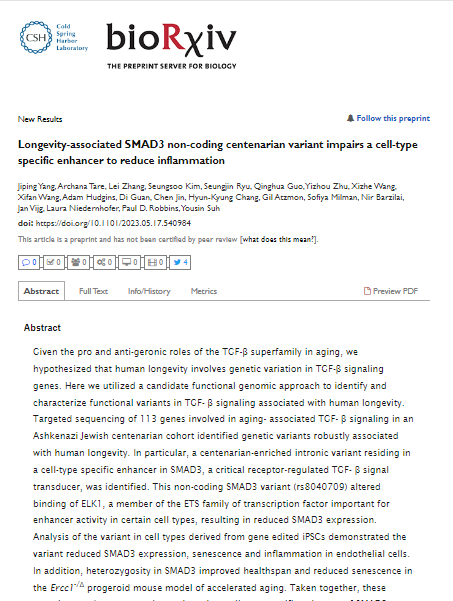
This study aimed to understand more about human longevity in its association with TGF-β signaling genes. To understand signaling, CRISPR/Cas9 knock-in of SMAD3 was performed in iPSCs using electroporation. Once cells were seeded on an ECM coated plate, they were dissociated after recovering and seeded on a CellRaft Array. Single cell derived colonies were isolated using the AIR System and expanded into 96-well collection plates for further genotyping using TaqMan genotyping assay and Sanger Sequencing. Using the CellRaft Arrays, this researcher was able to identify variants in the gene edited cells that demonstrated reduced SMAD3 expression contributing to human longevity. They were able to identify SMAD3 to represent a validated targeted for drug development for extending human health span.