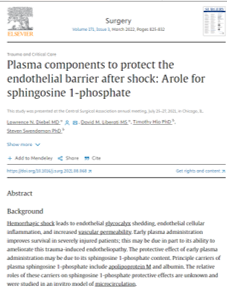
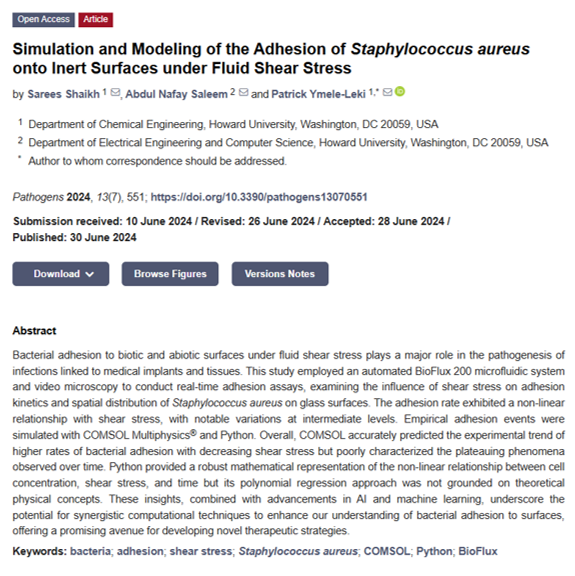
Hemorrhage with ensuing shock is the most common cause of early death in both the military and trauma population. Hemorrhagic shock leads to endothelial glycocalyx shedding, endothelial cellular inflammation, and increased vascular permeability. In this study, a BioFlux shear flow system was used to grow and assay endothelial cell monolayers in response to biomimetic shock to simulate injury. Using data collected from BioFlux experiments, the investigators concluded that sphingosine 1-phosphate protected endothelial and glycocalyx barrier function following microcirculatory shock.