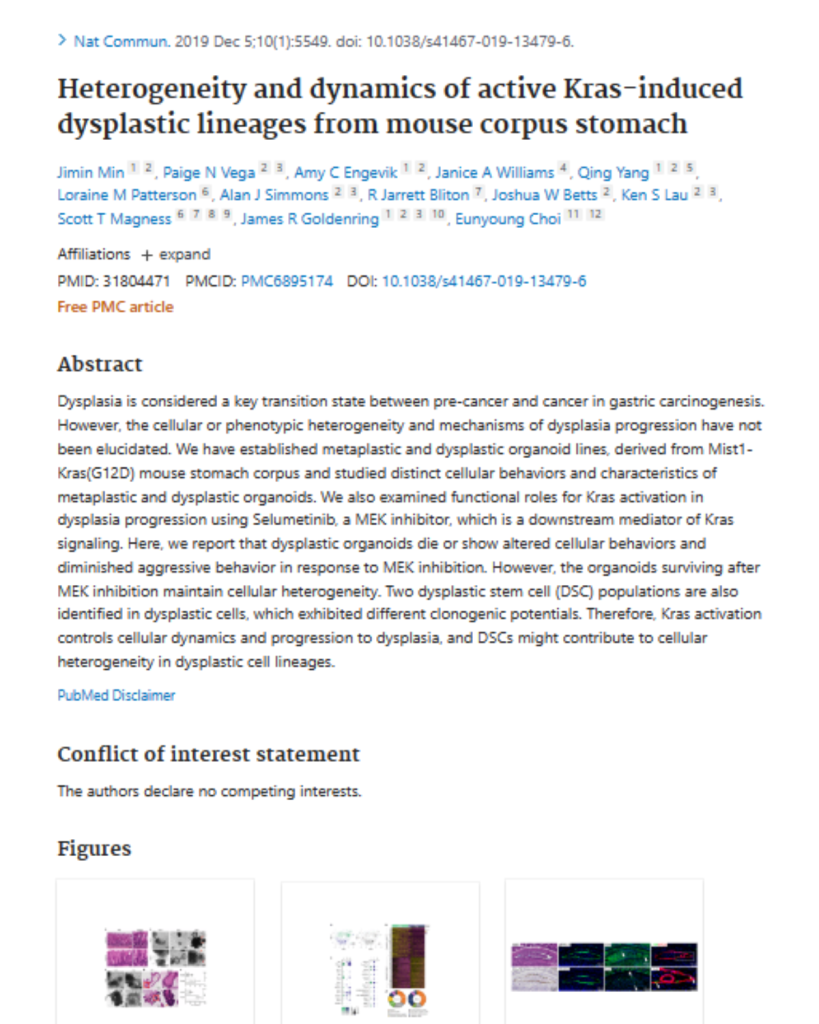
For intestinal type-gastric cancer, high-grade dysplasia frequently transitions to tumor progression and is a marker for carcinogenesis. To further model and study this transition, Mist1-kras(G12D) mouse stomach corpus-derived metaplastic and dysplastic organoid lines were established. The gastroids were treated with a MEK inhibitor to activate Kras, and clones that survived were further analyzed for heterogeneity. To initially identify dysplastic stem cell subpopulations from the gastroids, the gastroids were dissociated for identification with FACS. Two distinct populations were identified: double-positive CD44neg/CD133+/CD166+ and triple-positive CD44+/CD133+/CD166+ cells. To access these two populations for their stemness and sphere-formation efficiency, single cells were seeded onto CellRafts and accessed for sphere formation after 8 days. Out of 619 double-positive clones identified on the CellRafts 28.9% generated spheres, while only 6.3% of the 509 triple-positive clones had sphere formation; suggesting the double-positive subpopulation has an increase in stemness and spheroid generation. These results show CellRafts are useful for single-cell spheroid formation efficiency assays, and that Kras activation causes differences in stem cell characteristics, dysplasia progression, and heterogeneity in dysplastic gastroids.