Generate 100s of healthy monoclonal iPSCs or hESCs
The ability of CellRaftA microscale polystyrene growth surface within an array used to spatially segregate cells/colonies while maintaining shared media access, enabling imaging over time and targeted isolation. More technology to provide flask-like culture conditions while maintaining spatial separation of single cells greatly improves iPSC viability and monoclonal colony formation. In addition, a single CellRaft ArrayConsumables containing thousands of microwells (containing CellRafts) for spatial segregation, imaging, and isolation of single cells, monoclonal colonies, or 3D cultures. More can screen thousands of iPSCs, decreasing the time required for cell line generation and therapeutic discovery. This system can increase the utility of iPSCs by collapsing complicated iPSC maintenance and cell line development workflows.
Increase clonal iPSC generation by 25X compared to limiting dilution
Track and trace iPSCs from single cell to clone
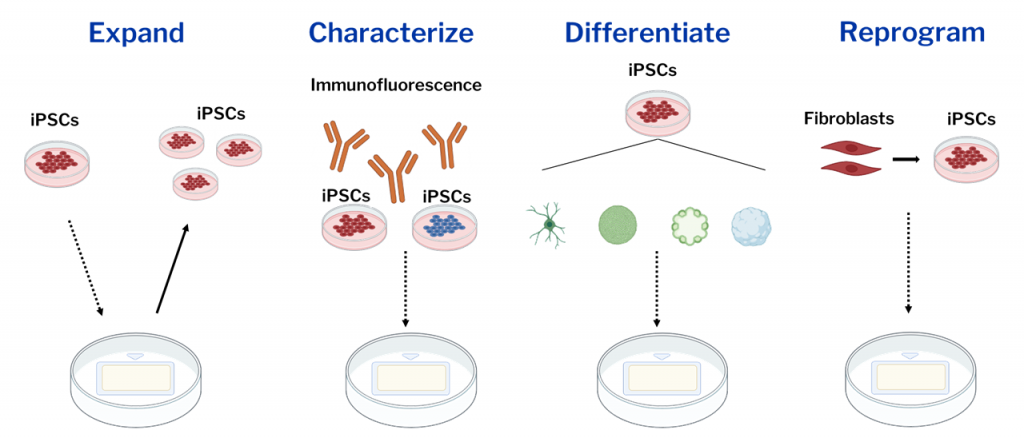
Expand, characterize, edit, and reprogram
Confirm pluripotency on-array prior to clonal expansion
Reduce time, consumables, materials, and labor required for iPSC clonal development
Enable 2D and 3D applications including cell line development, reprogramming, and differentiation
Fully automate the gentle isolation of viable, validated iPSC cell lines
Accelerating The Use Of Patient-derived hiPSC Neuronal Models By Increasing Efficiency Of Reprogramming And differentiation Using Cellraft Technology
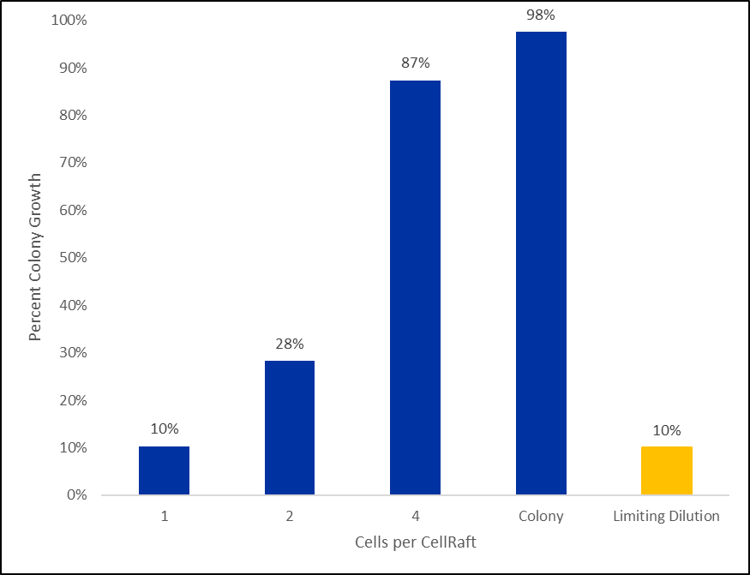
Increase in iPSC Monoclonal Colony Generation and Outgrowth
The CellRaft AIR SystemAn all-in-one platform for imaging, identifying, and isolating viable single cells, colonies, or organoids using CellRaft Arrays and software-guided selection with CellRaft Cytometry. More is able to screen more than 60,000 individual iPSCs per CellRaft ArrayConsumables containing thousands of microwells (containing CellRafts) for spatial segregation, imaging, and isolation of single cells, monoclonal colonies, or 3D cultures. More which is 500X more cells than a traditional 96-well plate with limiting dilutionA statistical cloning approach where cells are diluted to low density to “hopefully” seed one cell per well; commonly used but can be low-efficiency for difficult-to-clone lines. More. This increases your likelihood of success in these workflows.
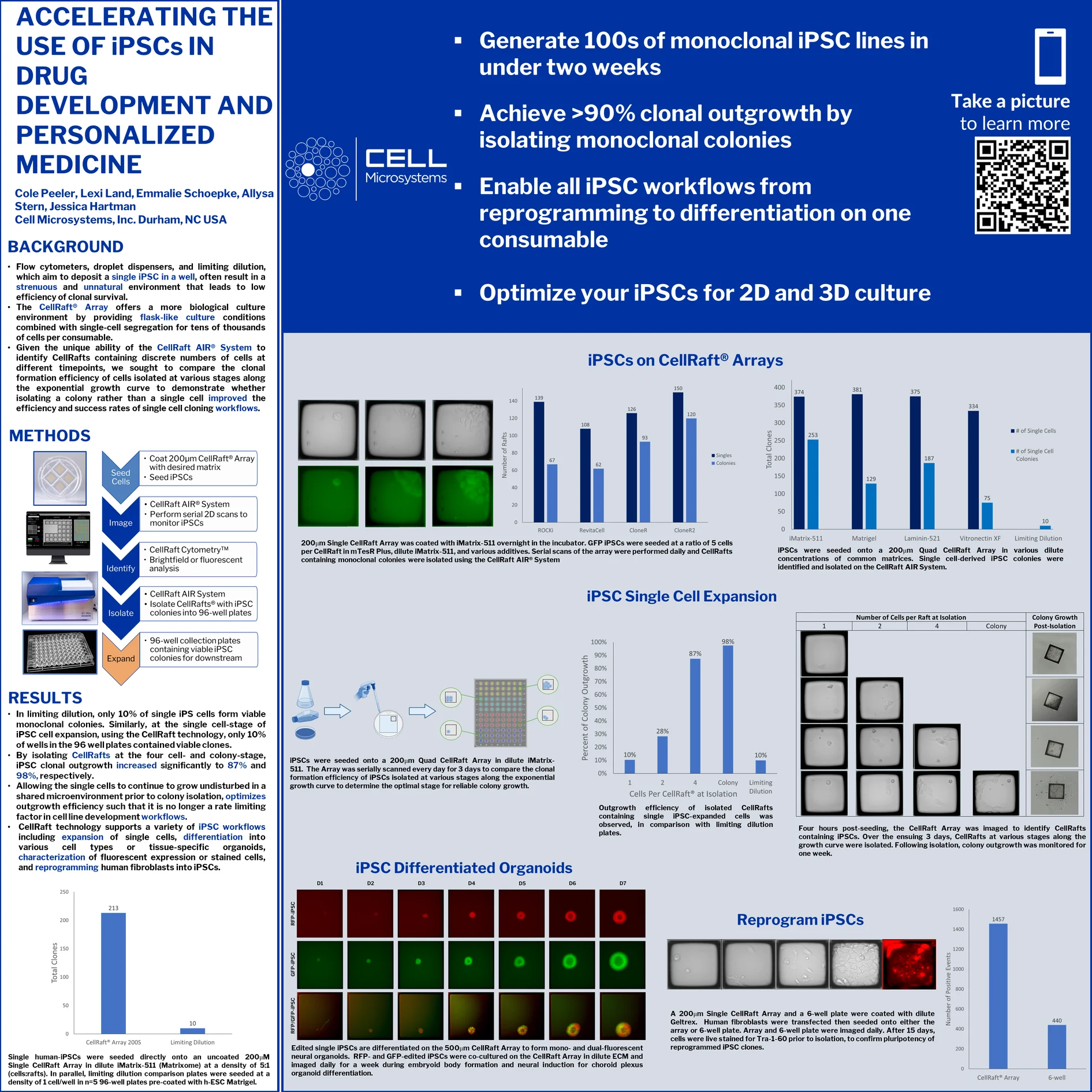
Figure 1. Rather than isolating a single cell, the isolation is done once the single cell has grown into a colony. The CellRafts in the experiment above were isolated at different growth stages and the success rate of outgrowth increases significantly when cells are isolated at the colony stage.
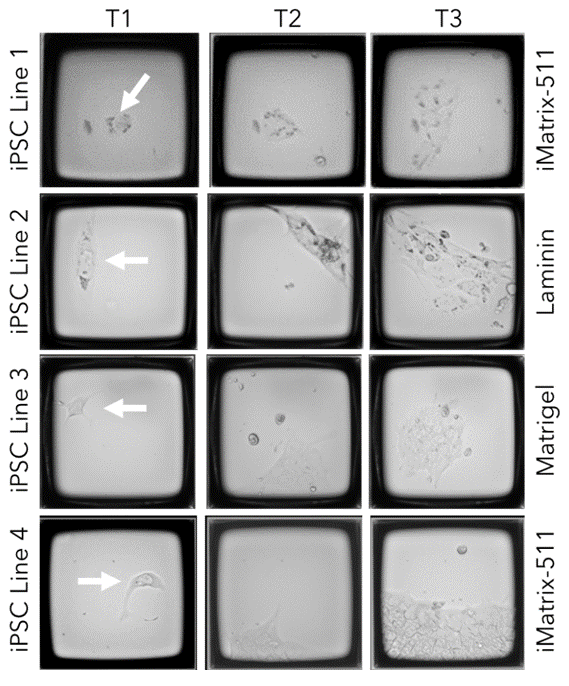
Track and Trace from Single Cell to Clone
Follow the maturation of a clone as it grows from a single cell.
Figure 2. Track and trace of iPSC clone formation on the CellRaft Air. Four different iPSC cell lines were seeded on CellRaft arrays on one of three coatings (iMatrix-511, h-ESC Matrigel, or Laminin). The arrays were serially scanned starting 4 hours post-cell seeding and every 24 hours after to monitor clone formation.
Enable All iPSC Workflows Using CellRaft Technology
Expand the clonal population on the array
Characterize for phenotyping or pluripotency
Differentiate into 3D tissues or organoids
Reprogram differentiated fibroblasts into pluripotent stem cells
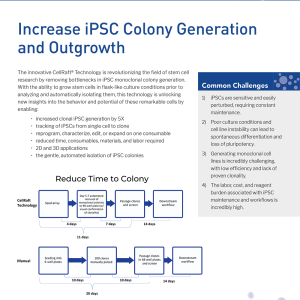
The labor, cost, and reagent burden associated with iPSC maintenance and workflows can be incredibly high and often prohibitive for many laboratories.
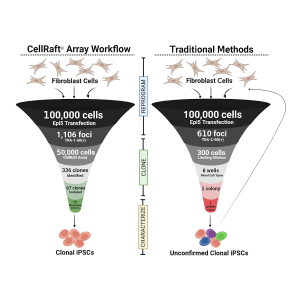
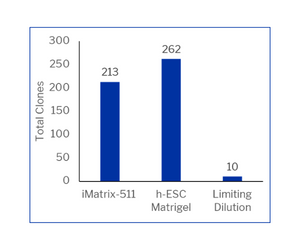
We compared clonal iPSC development using CellRaftA microscale polystyrene growth surface within an array used to spatially segregate cells/colonies while maintaining shared media access, enabling imaging over time and targeted isolation. More Technology to traditional limiting dilutionA statistical cloning approach where cells are diluted to low density to “hopefully” seed one cell per well; commonly used but can be low-efficiency for difficult-to-clone lines. More. Using the CellRaft ArrayConsumables containing thousands of microwells (containing CellRafts) for spatial segregation, imaging, and isolation of single cells, monoclonal colonies, or 3D cultures. More, we were able to generate over 200 single cell-derived iPSC clones on a single array, compared to 10 clones in a single 96-well plate with limiting dilutionA statistical cloning approach where cells are diluted to low density to “hopefully” seed one cell per well; commonly used but can be low-efficiency for difficult-to-clone lines. More. This workflow required 1000X less iPSC coating and 2000X less media per cell screened.
Grow and Isolate iPSC-derived Organoids
CellRaftA microscale polystyrene growth surface within an array used to spatially segregate cells/colonies while maintaining shared media access, enabling imaging over time and targeted isolation. More Technology can be used to grow and maintain hundreds of individual organoids. You can serially image the same organoid over time and phenotypically characterize organoids to identify the ones of interest.
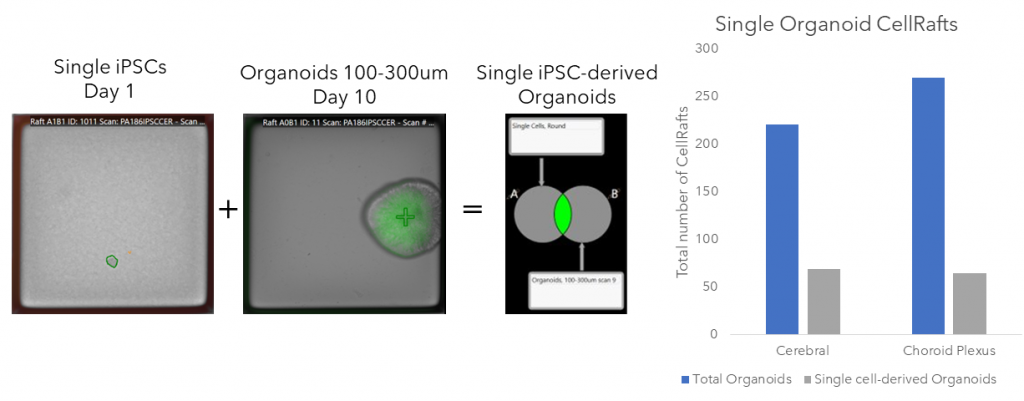
Figure 3. iPSC-derived Organoid Forming Efficiency. CellRaft Cytometry software identifies CellRaft iPSCs on the day of seeding and then the user is able to define characteristics of organoids of interest. The example above shows iPSC-derived organoids between 100 to 300um at day 10. We are able to generate 100s of organoids on a single array.
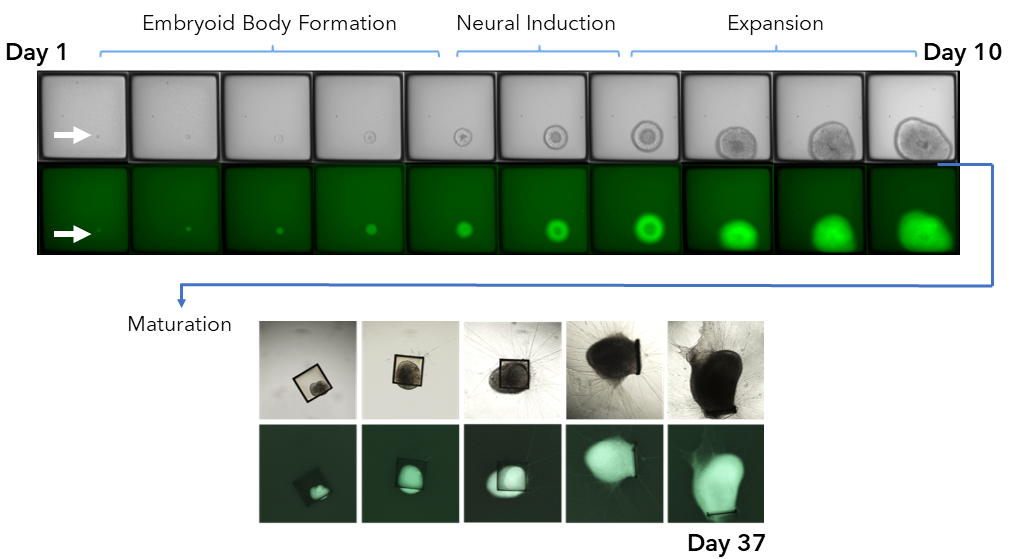
Figure 4. Cerebral Organoid Differentiation. A single green organoid is identified at day 1. The majority of the expansion is done by day 10 and then it is isolated into a collection plate. The organoid continues to grow off of the array in the collection plate.