

Blog

The Many Modulators of Sleep

As we go through our lives, we spend a third of that time sleeping. Although this time does not amass to anything consciously productive, it is a crucial time for the proper recovery and relaxation of our bodies. Without sleep, we spend our waking hours in a state where our productivity is less than optimal (no matter what a college student cramming for an exam would tell you).

This blog looks at some of the factors that can affect this crucial period of our lives and how it can be positively or negatively modulated.

How Do We Define Sleep?

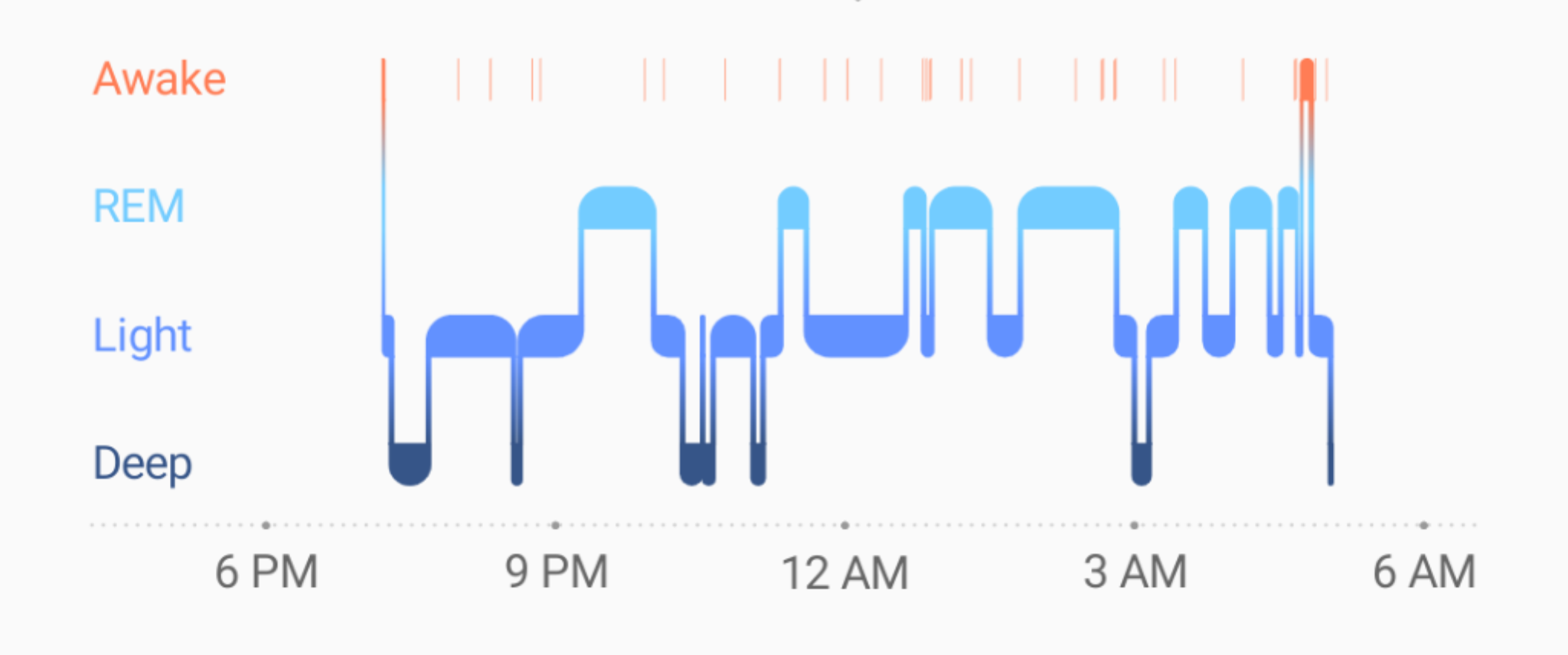
If you ever wore a fitness watch with sleep tracking capabilities to bed, you may see something akin to the graph below.
dnz3aos7pof41

Your body cycles between four different categories of sleep: Awake, Light (stages 1 and 2), Deep (stage 3), and REM (or Rapid Eye Movement). During REM sleep, which happens multiple times at night, we tend to dream.

Most sleep trackers will give you the time you slept, and even analyze if your sleep was good or not. However, the ultimate judge of this activity is our attentiveness and energy the next day.

Alcohol and Acute Insomnia

Insomnia is simply the inability to fall or to stay asleep. As some of us may know from prior experience (again most likely in college), drinking too much alcohol can have a sedative effect. So if acute insomnia hits, we may be tempted to get that nice old bourbon out with the hope that a glass would make us fall asleep faster. This is partly true – but there is a caveat.

Young woman savoring the bouquet of a glass of wine as she sniffs at the glass with her eyes closed in bliss as she concentrates on the smell with copyspace indoors in the kitchen Your sleep stages may be disrupted depending on what time you drink. Alcohol can make us fall to sleep faster, even taking us to stage 3, but at the detriment of REM sleep.

Once the alcohol starts to wear off, we end up with an increase in REM sleep (also known as REM rebound). Although dreaming is very subjective, it has been reported in some circles that dreams after consuming a lot of alcohol can be “interesting”.

So What is Happening at the Molecular Level?

Alcohol, as well as various prescribed sleeping pills such as Valium, Xanax, Ambien, and Lunesta, act on a very crucial ion channels in the brain known as gamma-aminobutyric acid receptors (GABA Receptors).

These receptors act as the primary inhibitory mechanism in nervous system. When activated by the neurotransmitter GABA, they act by “relaxing the nerves,” allowing the body to fall asleep. Sedatives such as alcohol and sleeping pills enhance the activity of GABA receptors, facilitating entry into sleep.

However, these sedatives can also be habit-forming. This is well attributed to alcohol and benzodiazepine-based drugs such as Valium and Xanax, which have several other side effects beyond the scope of this blog.

Modulation of the GABA Receptors

When a drug enhances the effect of a receptor, it is acting as a positive modulator. Alcohol and most sedatives fall into this class, but so do simple aromatics such as lavender.

Lavender essential oil contains a fragrance component called linalool, which likely acts on the GABA receptors by mildly enhancing their activity. Because of this, lavender can also slightly affect our REM sleep. Anything that positively enhances your GABA receptors can make you relaxed and eventually groggy.

sharon mccutcheon SavQfLRm4Do unsplash 23 scaled

Over-activation of GABA Receptors

Sometimes too much of a good thing is a bad thing. Idiopathic hypersomnia is a disease that causes excessive daytime sleepiness even after a good night sleep. Patients feel that sleep is not restoring their levels of attentiveness, and report that they feel as if they are “in a fog.” They may have great difficulty waking up from sleep or naps, feeling that their sleep was not productive to their wellbeing.

A recent study demonstrated that some cases of idiopathic hypersomnia can be due to the existence of an increased positive modulator acting upon GABA receptors. This was proven by applying cerebrospinal fluid (CSF) from patients to cells expressing the GABA receptors. When the receptors were subjected to CSF, a marked increase in their activity was observed. The link to the study is below:

Modulation of vigilance in the primary hypersomnias by endogenous enhancement of GABA(A) receptors

Dr. Andrew Jenkins recently demonstrated this research using an automated patch system, IonFlux Mercury HT. You can view his webinar below:

The Bottom Line

Sleep is a complex and necessary state in our lives that is vastly misunderstood. Although taken for granted, its disruption (whether insomnia or hypersomnia) can affect our wellbeing and decrease our quality of life. When our sleep is affected, we may inadvertently reach for a common sedative like alcohol to aid in sleeping. Sometimes these sedatives are mild and all around us (e.g., lavender). In either case, consciously or unconsciously, we all value the quality of our sleep.

Ali Yehia
Ali Yehia, Ph.D.

Ali Yehia has a Ph.D. in Cardiac Electrophysiology from McGill University. He has been involved in ion channel screening using Automate Patch Clamp since 2006. He joined Fluxion Biosciences in 2012, where he developed ion channel assays and IonFlux Mercury systems. He was the Chief Scientific Officer at Fluxion before moving to Cell Microsystems as the new Senior Director of the IonFlux product.

Related Posts

Unlocking the Secrets of Antibiotic Resistance: How Shear Flow Systems Are Revolutionizing the Fight Against Superbugs

In the ongoing battle against antibiotic-resistant bacteria, or “superbugs,” scientists are constantly seeking innovative tools to understand the mechanisms of resistance and develop effective treatments. One such groundbreaking technology is shear flow systems, which have emerged as game-changers in microbiological research. By simulating the dynamic conditions of bacteria’s natural environments, such as the human body or food processing, shear flow systems provide unique insights into bacterial behavior and resistance mechanisms that traditional static methods simply cannot achieve. In this blog post, we’ll explore the benefits of using shear flow systems to combat antibiotic resistance and develop next-generation therapies.

Why Shear Flow Systems Are Essential for Studying Antibiotic Resistance

Antibiotic resistance is a complex phenomenon influenced by a variety of factors, including genetic mutations, horizontal gene transfer, and the formation of biofilms. Traditional laboratory methods often fail to capture the dynamic nature of these processes, leading to incomplete or misleading results. Shear flow systems address this limitation by providing a more realistic environment for bacterial growth and interaction. Here’s how:

1. Mimicking Real-World Conditions

In the human body, bacteria are rarely in a static state. They are constantly exposed to fluid flow, such as blood circulation or urine flow, which influences their behavior and resistance mechanisms. Shear flow systems can replicate these conditions, allowing researchers to study how bacteria respond to antibiotics under realistic physiological conditions. This is critical for understanding how resistance develops and persists in vivo. This benefit was recently highlighted in a webinar presented by Dr. Katharina Richter, a microbiology researcher from the University of Adelaide in Australia. Using a high-throughput BioFlux Shear Flow System, Dr. Richter and her team were able to test 3 different methods of superbug treatments under physiological conditions.

2. Studying Biofilm Formation and Resistance

Biofilms—structured communities of bacteria encased in a protective matrix—are a major contributor to antibiotic resistance. Biofilms are notoriously difficult to treat because they shield bacteria from antibiotics and the immune system. Shear flow systems enable researchers to study biofilm formation in real time, observing how bacteria adhere to surfaces, form microcolonies, and develop resistance under flow conditions. For example, using a BioFlux, Dr. Richter was able to leverage high-resolution imaging to obtain unprecedented insight into the biofilm killing and prevention efficacy of a copper and diethyldithiocarbamate (DDC) combination nanoparticles¹. The group is currently investigating the use of a Cu-DDC infused gel that can be injected into wounds that are at high risk for chronic infection, such as hernia.

From Milliliters to Microliters: How a Shear Flow System Can Reduce Sample Requirements for Experiments

Imagine working with a rare patient-derived cell samples. In a traditional setup, you might need 1 milliliter of sample (equivalent to about 20 drops) to run an experiment. With a microfluidic system, you could potentially get the same results with just 10 microliters (about one-half of a single drop). This efficiency opens up entirely new research possibilities, especially in fields where sample availability is a limiting factor.

Whether due to rarity, cost, or difficulty in obtaining samples, the ability to conduct meaningful experiments with limited sample volumes has long been a goal in biological and chemical research. In this quest for more efficient and precise laboratory techniques, microfluidic shear flow systems have emerged as game-changing tools. These systems are not only reducing the amount of sample required for experiments but are also proving their versatility across a wide range of sample types.

Sample volume

Traditional experimental setups, including static and non-microfluidic shear flow, often demand significant amounts of material, which can be both costly and impractical. This is especially true when working with precious or limited samples such as rare biological specimens, expensive chemicals, or newly synthesized compounds. Enter microfluidic shear flow systems – an elegant solution that’s revolutionizing how investigators approach assays. These miniaturized platforms are proving invaluable across multiple disciplines by dramatically reducing sample requirements from milliliters down to microliters, while maintaining experimental integrity. This up to 1000-fold reduction in sample volume is particularly crucial when working with substances, such as patient-derived cells or novel pharmaceuticals. By significantly reducing the volume of reagents and samples needed, these systems cut costs and make experiments more sustainable.

Sample versatility

Equally as impressive as their sample and reagent reduction ability, is the versatility of microfluidic shear flow systems to adapt to different types of samples.

  • Human Samples: Researchers can study cellular behavior under controlled shear stress, mimicking physiological conditions such as blood or saliva flow.
  • Nanomaterials: The precise fluid dynamics in these systems allow for the uniform dispersion and manipulation of nanoparticles, enabling high-resolution studies in materials science.
  • Microbes: Continuous fluid flow more closely represents the natural environments of many microbes, such as plumbing, food processing, and chronic wounds.

The ability to work with multiple sample types in the same system allows researchers to explore different experimental conditions without the need for multiple specialized setups. By precisely controlling channel geometries and flow rates, researchers can subject different sample types to well-defined shear conditions, enabling detailed studies of cellular mechanics, protein interactions, and material properties.

Microfluidic…
Single Cells: Lab Tune Sung to the Rhythm of "Jingle Bells"

By Jessica Hartman, Ph.D.

Toiling in the lab

With a deadline on its way

To the scope I go

On a Saturday

I don’t see a clone

I’ve looked for one that’s right

What misery these data bring,

I’ll have to look all night,

Oh! Single cells, single cells, dilutions aren’t the way

Oh, I wish I had an AIR to pick a clone, to-da-ay!

Single cells, single cells, I need a better way

Use a Raft to grow a clone or be sad this holiday!

Use a Raft to grow a clone or be sad this holiday!

Now it’s getting late

My spirits are so low

My PI will hate

If my cells don’t grow

My eyesight’s getting dim

A clone I cannot see

My chances are so slim

I need CellRaft Cytometry

Oh! Single cells, single cells, sorters aren’t the way

Oh, I wish I had an AIR to pick a clone, to-da-ay!

Single cells, single cells, I need a better way

Use a Raft to grow a clone or be sad this holiday!

Use a Raft to grow a clone or be sad this holiday!

Oh! Single cells, single cells, dispensers aren’t the way

Oh, I wish I had an AIR to pick a clone, to-da-ay!

Single cells, single cells, I need a better way

Use a Raft to grow a clone or be sad this holiday!

Use a Raft to grow a clone or be sad this holiday!


 “Single Cell” vocalist: Virginia Laurie

Jessica Hartman, Ph.D.Senior Director of Product Applications | jessica.hartman@cellmicrosystems.comDr. Jessica Hartman has a B.S in Biology from the University…