
Blog

Models show a decrease in breast cancer metastasis when ion channels are modulated.

Existing pre-approved FDA drugs targeting potassium channels may help in Cancer treatment

Electrical voltage patterns in healthy cells serve as a guide for a well-organized cell development process. The opposite occurs with cancer, though. Cells lose their specialized roles, start growing into tumors, and spread into other tissues—a process known as metastasis. This process also causes a breakdown in the cell’s normal electrical patterns. Metastasis continues to be the biggest cause of death in cancer patients, and drugs that modulate the electrical patterns of tumor cells may hold promise as novel treatments.

Researchers at Tufts University recently demonstrated that tumor cell invasion in vitro and metastasis in animal models of breast cancer can both be reduced considerably by altering the voltage patterns in tumor cells using ion channel blocking drugs that have already received FDA approval for the treatment of other illnesses.

Treatment by pre-approved medication

An accelerated path to approval for the treatment of cancer may result from the revelation that medications, currently approved for other illnesses, can halt or stop spreading. A large selection of ready-to-use medications could be used for cancer therapy because ion channels, which control the bioelectrical properties of cells, are the third-most frequent targets for current pharmaceuticals.

Triple Negative Cancer Stat 1024x622 1

Triple-negative breast cancer (TNBC), which makes up around 15% of all occurrences of breast cancer, was the focus of a recent Tufts University study. TNBC has a higher likelihood of spreading than any other subtype of breast cancer, thus researchers are concentrating their efforts on treating it because it has a dismal five-year prognosis. The Tufts team was able to demonstrate that modulating the membrane voltage properties of breast cancer cells can affect the progression of metastasis. Using a mouse lung model, they showed a decrease of 50% in the number of metastatic sites.

A wide range of ion channel-target drugs already exist, which affect the ability of cells to conduct positively or negatively charged ions across the cellular membrane. These drugs are used to treat anxiety, pain, metabolism, and cardiovascular disorders.

In the study, Tufts scientists genetically over-expressed potassium ion channels in tumor cells, which caused the inside of the cells to become more negatively charged. As a result of the voltage imbalance, tumor growth and metastasis in plated cells and animal models were both accelerated. In contrast, blocking the ion channels resulted in a restoration of normal cell voltages, decreased tumor cell invasion, and a markedly reduced rate of metastasis.

Their findings were published in the eBioMedicine:
Potassium channel-driven bioelectric signalling regulates metastasis in triple-negative breast cancer

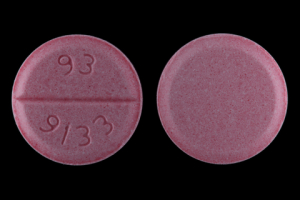
The efficiency of four FDA-approved potassium ion channel blockers in eliminating tumor cells was compared in the study. Amiodarone, which had the greatest impact on restoring normal cell voltages, was chosen to be tested for its efficacy in treating breast cancer in mice. The medicine, which is authorized for use in treating cardiac rhythm abnormalities, was found to reduce the tumor’s capacity to spread as cells detached and traveled to different places of the body.
000939133

The researchers discovered a number of biochemical pathways involved in cell migration by examining the genes that were activated by the voltage shift. The ion channel-blocking drug’s actions were consistent with restricting the mobility of the cells, preventing them from straying and developing new tumors.

Going FORWARD

In addition to current standard-of-care therapies like chemotherapy, the Tufts team will continue to investigate the impact of ion channel blockers on cancer in animal models. Since amiodarone and comparable medications have already received human use approval, Phase I clinical trials in small groups of cancer patients may begin soon.

More and more studies are confirming the importance of ion channel modulation in cancer treatment and therapy. Although traditionally used for cardiac and neurological research, dedicated ion channel research devices such as Fluxion’s IonFlux Mercury automated patch clamp systems are perfectly suited for potassium channel modulation for cancer research.

Ali Yehia
Ali Yehia, Ph.D.

Ali Yehia has a Ph.D. in Cardiac Electrophysiology from McGill University. He has been involved in ion channel screening using Automate Patch Clamp since 2006. He joined Fluxion Biosciences in 2012, where he developed ion channel assays and IonFlux Mercury systems. He was the Chief Scientific Officer at Fluxion before moving to Cell Microsystems as the new Senior Director of the IonFlux product.


Related Posts

Unlocking the Secrets of Antibiotic Resistance: How Shear Flow Systems Are Revolutionizing the Fight Against Superbugs

In the ongoing battle against antibiotic-resistant bacteria, or “superbugs,” scientists are constantly seeking innovative tools to understand the mechanisms of resistance and develop effective treatments. One such groundbreaking technology is shear flow systems, which have emerged as game-changers in microbiological research. By simulating the dynamic conditions of bacteria’s natural environments, such as the human body or food processing, shear flow systems provide unique insights into bacterial behavior and resistance mechanisms that traditional static methods simply cannot achieve. In this blog post, we’ll explore the benefits of using shear flow systems to combat antibiotic resistance and develop next-generation therapies.

Why Shear Flow Systems Are Essential for Studying Antibiotic Resistance

Antibiotic resistance is a complex phenomenon influenced by a variety of factors, including genetic mutations, horizontal gene transfer, and the formation of biofilms. Traditional laboratory methods often fail to capture the dynamic nature of these processes, leading to incomplete or misleading results. Shear flow systems address this limitation by providing a more realistic environment for bacterial growth and interaction. Here’s how:

1. Mimicking Real-World Conditions

In the human body, bacteria are rarely in a static state. They are constantly exposed to fluid flow, such as blood circulation or urine flow, which influences their behavior and resistance mechanisms. Shear flow systems can replicate these conditions, allowing researchers to study how bacteria respond to antibiotics under realistic physiological conditions. This is critical for understanding how resistance develops and persists in vivo. This benefit was recently highlighted in a webinar presented by Dr. Katharina Richter, a microbiology researcher from the University of Adelaide in Australia. Using a high-throughput BioFlux Shear Flow System, Dr. Richter and her team were able to test 3 different methods of superbug treatments under physiological conditions.

2. Studying Biofilm Formation and Resistance

Biofilms—structured communities of bacteria encased in a protective matrix—are a major contributor to antibiotic resistance. Biofilms are notoriously difficult to treat because they shield bacteria from antibiotics and the immune system. Shear flow systems enable researchers to study biofilm formation in real time, observing how bacteria adhere to surfaces, form microcolonies, and develop resistance under flow conditions. For example, using a BioFlux, Dr. Richter was able to leverage high-resolution imaging to obtain unprecedented insight into the biofilm killing and prevention efficacy of a copper and diethyldithiocarbamate (DDC) combination nanoparticles¹. The group is currently investigating the use of a Cu-DDC infused gel that can be injected into wounds that are at high risk for chronic infection, such as hernia.

From Milliliters to Microliters: How a Shear Flow System Can Reduce Sample Requirements for Experiments

Imagine working with a rare patient-derived cell samples. In a traditional setup, you might need 1 milliliter of sample (equivalent to about 20 drops) to run an experiment. With a microfluidic system, you could potentially get the same results with just 10 microliters (about one-half of a single drop). This efficiency opens up entirely new research possibilities, especially in fields where sample availability is a limiting factor.

Whether due to rarity, cost, or difficulty in obtaining samples, the ability to conduct meaningful experiments with limited sample volumes has long been a goal in biological and chemical research. In this quest for more efficient and precise laboratory techniques, microfluidic shear flow systems have emerged as game-changing tools. These systems are not only reducing the amount of sample required for experiments but are also proving their versatility across a wide range of sample types.

Sample volume

Traditional experimental setups, including static and non-microfluidic shear flow, often demand significant amounts of material, which can be both costly and impractical. This is especially true when working with precious or limited samples such as rare biological specimens, expensive chemicals, or newly synthesized compounds. Enter microfluidic shear flow systems – an elegant solution that’s revolutionizing how investigators approach assays. These miniaturized platforms are proving invaluable across multiple disciplines by dramatically reducing sample requirements from milliliters down to microliters, while maintaining experimental integrity. This up to 1000-fold reduction in sample volume is particularly crucial when working with substances, such as patient-derived cells or novel pharmaceuticals. By significantly reducing the volume of reagents and samples needed, these systems cut costs and make experiments more sustainable.

Sample versatility

Equally as impressive as their sample and reagent reduction ability, is the versatility of microfluidic shear flow systems to adapt to different types of samples.

  • Human Samples: Researchers can study cellular behavior under controlled shear stress, mimicking physiological conditions such as blood or saliva flow.
  • Nanomaterials: The precise fluid dynamics in these systems allow for the uniform dispersion and manipulation of nanoparticles, enabling high-resolution studies in materials science.
  • Microbes: Continuous fluid flow more closely represents the natural environments of many microbes, such as plumbing, food processing, and chronic wounds.

The ability to work with multiple sample types in the same system allows researchers to explore different experimental conditions without the need for multiple specialized setups. By precisely controlling channel geometries and flow rates, researchers can subject different sample types to well-defined shear conditions, enabling detailed studies of cellular mechanics, protein interactions, and material properties.

Microfluidic…
Single Cells: Lab Tune Sung to the Rhythm of "Jingle Bells"

By Jessica Hartman, Ph.D.

Toiling in the lab

With a deadline on its way

To the scope I go

On a Saturday

I don’t see a clone

I’ve looked for one that’s right

What misery these data bring,

I’ll have to look all night,

Oh! Single cells, single cells, dilutions aren’t the way

Oh, I wish I had an AIR to pick a clone, to-da-ay!

Single cells, single cells, I need a better way

Use a Raft to grow a clone or be sad this holiday!

Use a Raft to grow a clone or be sad this holiday!

Now it’s getting late

My spirits are so low

My PI will hate

If my cells don’t grow

My eyesight’s getting dim

A clone I cannot see

My chances are so slim

I need CellRaft Cytometry

Oh! Single cells, single cells, sorters aren’t the way

Oh, I wish I had an AIR to pick a clone, to-da-ay!

Single cells, single cells, I need a better way

Use a Raft to grow a clone or be sad this holiday!

Use a Raft to grow a clone or be sad this holiday!

Oh! Single cells, single cells, dispensers aren’t the way

Oh, I wish I had an AIR to pick a clone, to-da-ay!

Single cells, single cells, I need a better way

Use a Raft to grow a clone or be sad this holiday!

Use a Raft to grow a clone or be sad this holiday!


 “Single Cell” vocalist: Virginia Laurie

Jessica Hartman, Ph.D.Senior Director of Product Applications | jessica.hartman@cellmicrosystems.comDr. Jessica Hartman has a B.S in Biology from the University…