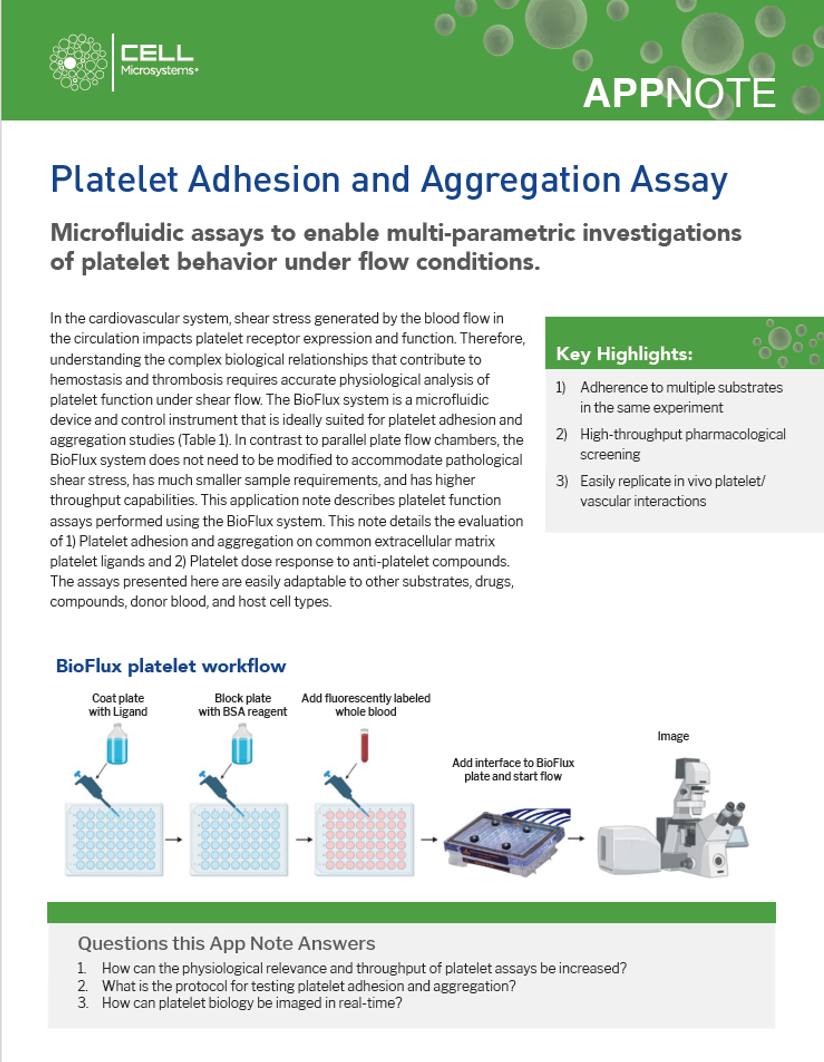
Traditional platelet aggregation assays, such as light transmission and multiple-electrode aggregometry, rely on aggregation agonists in static conditions, thereby limiting their physiological relevance. In addition, these assays lack the ability to examine cell-cell interactions, platelet adhesion to various substrates, and modeling platelet function in various areas of the vasculature by assaying under multiple shear stresses.
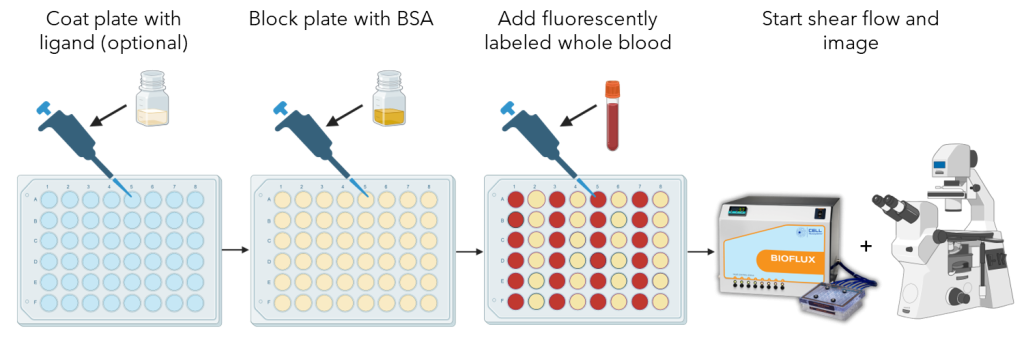
BioFlux shear flow systems overcome these disadvantages by enabling the visualization and analysis of platelet aggregation and adhesion under physiological and pathophysiological shear stresses. High-throughput microplates, combined with versatile sample capabilities including whole blood can reduce assay time to 3 hours, making BioFlux the ideal system to investigate platelet function in disorders such as COVID-19 and Sickle cell disease.
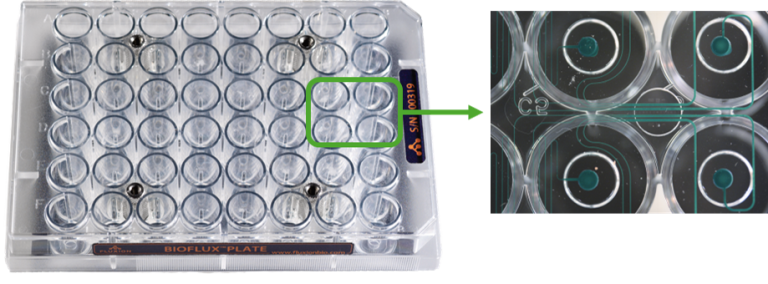
BioFlux 48-well plate (left). Close up view of microfluidic channels connecting experimental well pairs with a cover slip glass microscope viewing window between the wells.
Key BioFlux Advantages For Platelet Aggregation & Adhesion Studies
Physiological assessment of adhesion and aggregation using primary endothelial cells, human peripheral blood mononuclear cells, and more
Assay platelet adhesion and aggregation kinetics in about 3 hours
Utilize time-lapse microscopy and post-experiment image analysis to determine rolling distance under flow
Examine up to 24 different monolayers on one plate to determine IC50 or screen multiple compounds under identical conditions
Calculate area of platelet adhesion by utilizing Montage Plus analysis capabilities