
Blog

Debunking the Top 10 Myths of Generating Monoclonal Colonies: How CellRaft Technology Breaks the Barriers

Generating monoclonal colonies is a fundamental step in cell biology research, allowing researchers to study individual cells and their unique characteristics. However, misconceptions and challenges have surrounded this process for years. Fortunately, CellRaft® Technology has emerged as a revolutionary solution, debunking these myths and transforming the way monoclonal colonies are generated. In this blog post, we will explore the top 10 myths associated with generating monoclonal colonies and how CellRaft Technology shatters these barriers, paving the way for more efficient and reliable research.
 

Time 2 on microscope 400x331 1 300x300 1

Myth 1: Generating monoclonal colonies is time-consuming and labor-intensive.

CellRaft Reality:

CellRaft Technology streamlines the process of generating monoclonal colonies by enabling high-throughput single-cell isolation and culture, reducing time and labor required.

Plastic waste 300x300 1

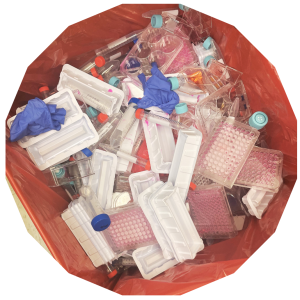
Myth 2: Monoclonal colony generation requires large quantities of media and plasticware.

CellRaft Reality:

CellRaft Technology optimizes resource utilization by isolating and culturing thousands of individual cells on arrays made up of thousands of microwells that allow cells to be spatially separated while sharing media, minimizing the need for excessive media and plasticware.


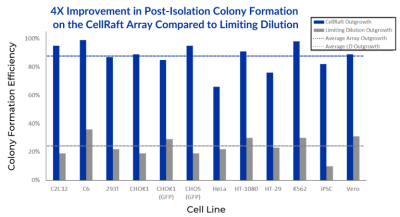
Myth 3: Generating monoclonal colonies results in low cloning efficiency.

CellRaft Reality:

CellRaft Technology ensures high cloning efficiency by providing a gentle and non-invasive method of isolating single cells, minimizing stress, and preserving cell viability.



Cells 1234 600x164 1 400x109 1

Myth 4: Monoclonal colonies lack clonality.

CellRaft Reality:

CellRaft Technology enables the imaging of cells from the single cell stage to the colony stage to provide a record of growth.


Myth 5: Generating monoclonal colonies is subject to human error and bias.

CellRaft Reality:

CellRaft Technology offers a standardized and automated approach, reducing subjective interpretation and minimizing human error.


Limiting Dilution Chart from Sci Poster 768x416 1 400x217 1

Myth 6: Monoclonal colony generation leads to cell viability loss during subcloning.

CellRaft Reality:

CellRaft Technology preserves high cell viability during subcloning by providing a gentle and controlled environment for isolation, without using fluidics.


Myth 7: Generating monoclonal colonies lacks traceability and documentation.

CellRaft Reality:

CellRaft Technology incorporates traceability features, allowing researchers to easily track and document the lineage of monoclonal colonies, ensuring reproducibility and data integrity.


CellRaft Tech Video Image 400x293 1

Myth 8: Monoclonal colony generation is limited in scalability and throughput.

CellRaft Reality:

CellRaft Technology enables high-throughput single-cell isolation and culture, facilitating the generation of large numbers of monoclonal colonies with scalability and efficiency.
 

Check Out Case Study 319x400 1

Myth 9: Generating monoclonal colonies from rare cell populations is challenging.

CellRaft Reality:

CellRaft Technology excels in identifying and isolating rare cell populations, enabling their characterization and downstream analysis with ease.


Myth 10: Monoclonal colony generation requires specialized expertise.

CellRaft Reality:

CellRaft Technology simplifies the process of generating monoclonal colonies, making it accessible to researchers with varying levels of expertise and reducing the need for specialized skills.


CellRaft Technology has revolutionized the field of generating monoclonal colonies by dispelling the myths and limitations that have hindered this process for years. By offering high-throughput single-cell isolation, optimizing resource utilization, and simplifying workflows, CellRaft Technology empowers researchers to generate monoclonal colonies with enhanced efficiency, reproducibility, and scalability. Embrace the possibilities that CellRaft Technology brings, and unlock new avenues of discovery in cell biology research. Say goodbye to myths and welcome a new era of reliable and impactful research.


Explore CellRaft Technology button 600x125 1


Kap Kumar 2023
Kap Kumar, Ph.D., MBA
Vice President of Strategic Marketing | kkumar@cellmicrosystems.com

Kap Kumar has over 25 years of experience in the life sciences tools and reagents industry. He started in R&D and product development, where he launched products for cell biology and imaging applications. For the last 15 years, Kap has led strategic marketing, market development, and product management for a variety of companies, including Thermo Fisher Scientific (Life Technologies), Danaher (Beckman Coulter Life Sciences), Cell Signaling Technologies, Nexcelom Biosciences, and Avantor-VWR. Kap has diverse experience managing complex portfolios, including instruments, consumables, and reagents, both in early-stage and mature companies. Kap has a Ph.D. in Cell and Molecular Biology from Kent State University, a post-doctorate from Harvard Medical School, and an MBA from Babson College.


Related Posts

Unlocking the Secrets of Antibiotic Resistance: How Shear Flow Systems Are Revolutionizing the Fight Against Superbugs

In the ongoing battle against antibiotic-resistant bacteria, or “superbugs,” scientists are constantly seeking innovative tools to understand the mechanisms of resistance and develop effective treatments. One such groundbreaking technology is shear flow systems, which have emerged as game-changers in microbiological research. By simulating the dynamic conditions of bacteria’s natural environments, such as the human body or food processing, shear flow systems provide unique insights into bacterial behavior and resistance mechanisms that traditional static methods simply cannot achieve. In this blog post, we’ll explore the benefits of using shear flow systems to combat antibiotic resistance and develop next-generation therapies.

Why Shear Flow Systems Are Essential for Studying Antibiotic Resistance

Antibiotic resistance is a complex phenomenon influenced by a variety of factors, including genetic mutations, horizontal gene transfer, and the formation of biofilms. Traditional laboratory methods often fail to capture the dynamic nature of these processes, leading to incomplete or misleading results. Shear flow systems address this limitation by providing a more realistic environment for bacterial growth and interaction. Here’s how:

1. Mimicking Real-World Conditions

In the human body, bacteria are rarely in a static state. They are constantly exposed to fluid flow, such as blood circulation or urine flow, which influences their behavior and resistance mechanisms. Shear flow systems can replicate these conditions, allowing researchers to study how bacteria respond to antibiotics under realistic physiological conditions. This is critical for understanding how resistance develops and persists in vivo. This benefit was recently highlighted in a webinar presented by Dr. Katharina Richter, a microbiology researcher from the University of Adelaide in Australia. Using a high-throughput BioFlux Shear Flow System, Dr. Richter and her team were able to test 3 different methods of superbug treatments under physiological conditions.

2. Studying Biofilm Formation and Resistance

Biofilms—structured communities of bacteria encased in a protective matrix—are a major contributor to antibiotic resistance. Biofilms are notoriously difficult to treat because they shield bacteria from antibiotics and the immune system. Shear flow systems enable researchers to study biofilm formation in real time, observing how bacteria adhere to surfaces, form microcolonies, and develop resistance under flow conditions. For example, using a BioFlux, Dr. Richter was able to leverage high-resolution imaging to obtain unprecedented insight into the biofilm killing and prevention efficacy of a copper and diethyldithiocarbamate (DDC) combination nanoparticles¹. The group is currently investigating the use of a Cu-DDC infused gel that can be injected into wounds that are at high risk for chronic infection, such as hernia.

From Milliliters to Microliters: How a Shear Flow System Can Reduce Sample Requirements for Experiments

Imagine working with a rare patient-derived cell samples. In a traditional setup, you might need 1 milliliter of sample (equivalent to about 20 drops) to run an experiment. With a microfluidic system, you could potentially get the same results with just 10 microliters (about one-half of a single drop). This efficiency opens up entirely new research possibilities, especially in fields where sample availability is a limiting factor.

Whether due to rarity, cost, or difficulty in obtaining samples, the ability to conduct meaningful experiments with limited sample volumes has long been a goal in biological and chemical research. In this quest for more efficient and precise laboratory techniques, microfluidic shear flow systems have emerged as game-changing tools. These systems are not only reducing the amount of sample required for experiments but are also proving their versatility across a wide range of sample types.

Sample volume

Traditional experimental setups, including static and non-microfluidic shear flow, often demand significant amounts of material, which can be both costly and impractical. This is especially true when working with precious or limited samples such as rare biological specimens, expensive chemicals, or newly synthesized compounds. Enter microfluidic shear flow systems – an elegant solution that’s revolutionizing how investigators approach assays. These miniaturized platforms are proving invaluable across multiple disciplines by dramatically reducing sample requirements from milliliters down to microliters, while maintaining experimental integrity. This up to 1000-fold reduction in sample volume is particularly crucial when working with substances, such as patient-derived cells or novel pharmaceuticals. By significantly reducing the volume of reagents and samples needed, these systems cut costs and make experiments more sustainable.

Sample versatility

Equally as impressive as their sample and reagent reduction ability, is the versatility of microfluidic shear flow systems to adapt to different types of samples.

  • Human Samples: Researchers can study cellular behavior under controlled shear stress, mimicking physiological conditions such as blood or saliva flow.
  • Nanomaterials: The precise fluid dynamics in these systems allow for the uniform dispersion and manipulation of nanoparticles, enabling high-resolution studies in materials science.
  • Microbes: Continuous fluid flow more closely represents the natural environments of many microbes, such as plumbing, food processing, and chronic wounds.

The ability to work with multiple sample types in the same system allows researchers to explore different experimental conditions without the need for multiple specialized setups. By precisely controlling channel geometries and flow rates, researchers can subject different sample types to well-defined shear conditions, enabling detailed studies of cellular mechanics, protein interactions, and material properties.

Microfluidic…
Single Cells: Lab Tune Sung to the Rhythm of "Jingle Bells"

By Jessica Hartman, Ph.D.

Toiling in the lab

With a deadline on its way

To the scope I go

On a Saturday

I don’t see a clone

I’ve looked for one that’s right

What misery these data bring,

I’ll have to look all night,

Oh! Single cells, single cells, dilutions aren’t the way

Oh, I wish I had an AIR to pick a clone, to-da-ay!

Single cells, single cells, I need a better way

Use a Raft to grow a clone or be sad this holiday!

Use a Raft to grow a clone or be sad this holiday!

Now it’s getting late

My spirits are so low

My PI will hate

If my cells don’t grow

My eyesight’s getting dim

A clone I cannot see

My chances are so slim

I need CellRaft Cytometry

Oh! Single cells, single cells, sorters aren’t the way

Oh, I wish I had an AIR to pick a clone, to-da-ay!

Single cells, single cells, I need a better way

Use a Raft to grow a clone or be sad this holiday!

Use a Raft to grow a clone or be sad this holiday!

Oh! Single cells, single cells, dispensers aren’t the way

Oh, I wish I had an AIR to pick a clone, to-da-ay!

Single cells, single cells, I need a better way

Use a Raft to grow a clone or be sad this holiday!

Use a Raft to grow a clone or be sad this holiday!


 “Single Cell” vocalist: Virginia Laurie

Jessica Hartman, Ph.D.Senior Director of Product Applications | jessica.hartman@cellmicrosystems.comDr. Jessica Hartman has a B.S in Biology from the University…