


Blog

DIY breakdown: Advantages and Disadvantages of Do-it-yourself Flow Systems

Mechanical forces have been shown to impact cell phenotype and function in vivo. The most prolific of these forces is shear stress, induced by fluid movement throughout the body. Shear stress has been demonstrated to impact polarization, alignment, differentiation, and function of various cell types, including endothelial cells, leukocytes, and stem cells.

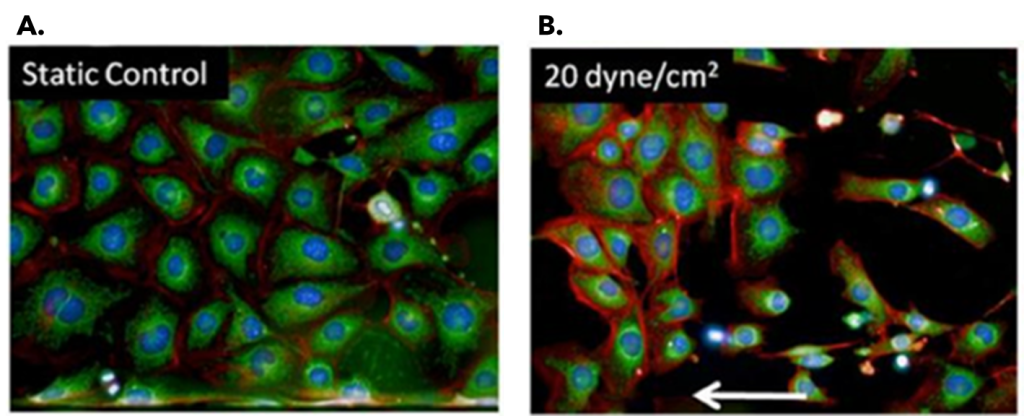
Despite the impact of shear flow, the majority of in vitro cell culture experiments are still conducted in static systems, such as plates and flasks. This creates a challenge when attempting to translate the results of in vitro experiments to an in vivo environment, as cells may not look or act the same. To overcome this gulf, some scientists have begun to use do-it-yourself flow cells. Although these DIY flow cells improve the physiological relevance of in vitro experiments by attempting to mimic an in vivo environment, there are several drawbacks that are outlined below.

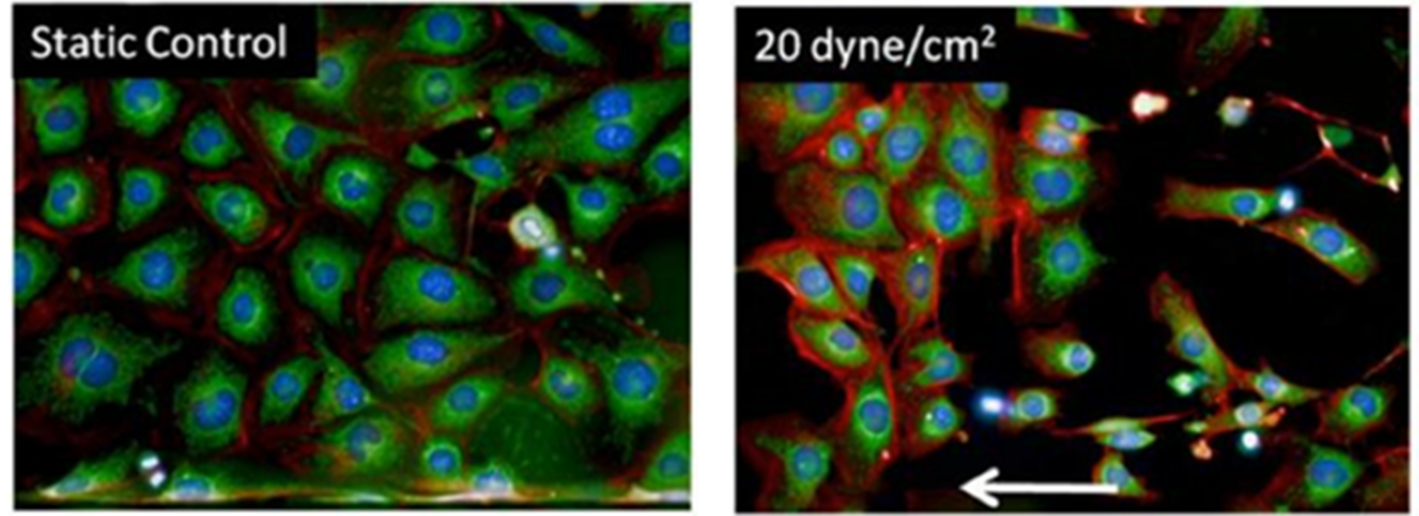
endothelial cells with and without flow

Figure 1. Representative images showing endothelial cells cultured without (A) and with shear flow (B).

DIY Drawbacks

  1. Piecemeal system

DIY flow cells are exactly that, do-it-yourself. That means multiple components, including pumps, tubing, slides, and more must be assembled according to the experimental needs. This could mean hours of checking and double-checking parts , ordering parts from multiple companies, or, as is the case with a bubble trap, building parts yourself.        


  1. Carryover and contamination

With most DIY flow systems, the fluid that runs across the cells is carried from a bulk container to and from the flow chamber by a tube or set of tubes. Although effective, this means that tubing must be thoroughly cleaned or changed between experiments to avoid carryover or contamination from previous experiments. This creates a burden, as investigators must either spend money on new tubing or spend valuable time cleaning tubing and waiting for it to dry.


  1. Throughput limitations

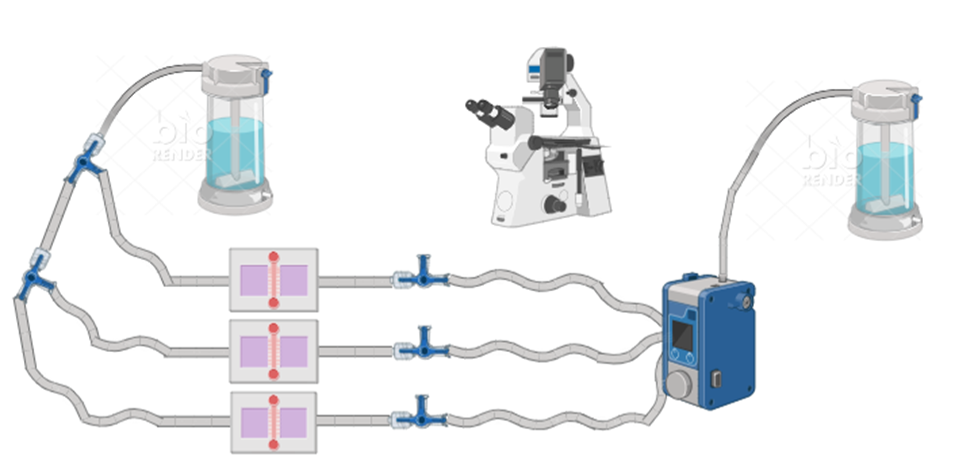
Collecting data quickly is a key component in meeting deadlines for publications, grant applications, and more. Although some slide-based flow chambers offer > 1 well throughput, the per slide throughput is typically limited to 6 chambers or less. This means that to achieve “high throughput” experimentation, a complicated setup is required (Figure 2). This type of setup is time-consuming, requires a large footprint in the lab, and is expensive.

DIY shear flow system

Figure 2. Representative “DIY” flow cell setup. A typical setup includes flow chamber(s), reservoirs, tubing, 3 way stopcocks, male and female luer adapters, a pressure controller, and a microscope with a camera for imaging.


Affordable Alternative to DIY Flow System

With these issues in mind, a viable alternative to slide-based shear flow systems is extremely desirable. The BioFlux family of shear flow systems separate themselves from slide-based shear flow systems by using microfluidic channels embedded into the bottom of 6, 24, or 48 well glass bottom plates. The microfluidic design combined with leveraging pneumatic pressure to precisely control shear flow has several key advantages over traditional slide-based shear flow systems.


BioFlux Advantages

  1. A Complete System

BioFlux is a complete, integrated solution, including hardware, software, and consumables. Unlike DIY flow cells, everything is included and engineered to work together seamlessly.

  1. Carryover and Contamination free

BioFlux pioneered the concept of contactless pneumatic pumping; samples and solutions only touch the single-use consumable, so starting the next experiment is as easy as filling a new plate. No need to change or sterilize pumps or tubing between experiments.

  1. High Throughput

BioFlux plates are available in Society for Biomolecular Screening (SBS) standard-sized 6, 24, or 48 well plates. This means that any lab equipment that works with standard plates can also be used on BioFlux plates, including multichannel pipettes. A standard 48-well BioFlux plate can run 24 simultaneous experiments. In addition, BioFlux offers a Quattro addon that enables up to 4 plates to run simultaneously, speeding drug discovery and other investigations that require high throughput assays.

  1. Experimental Flexibility

A major advantage of the BioFlux 200 and BioFlux 1000Z systems is the ability to create two independent parallel flow streams when using a 24-well plate. This enables the generation of a gradient between the two fluids. This gradient allows for complex experimentation such as cell migration/invasion, chemotaxis, and wound healing assays that are either not feasible or not possible with conventional flow cells.

Advantages of DIY Flow Systems

  1. Price

Although the BioFlux family of shear flow systems provides key advantages over DIY flow cells, typically, a DIY system can be assembled for a lower price than BioFlux 200 or BioFlux 1000Z. However, the recent introduction of the BioFlux One system has eliminated this price gap. Although not as experimentally flexible as BioFlux 200 and BioFlux 1000Z, BioFlux One is a complete system with all the functionality of a piecemeal DIY system but with higher throughput and a cleaner environment.

  1. Cell Recovery

Another advantage of DIY flow cells in comparison to BioFlux systems is the recovery of adherent cells. Some DIY systems can be disassembled for recovery and further analysis of adherent cells. Standard glass bottom BioFlux plates require that adherent cells be released by flushing the microfluidics with an enzyme, such as trypsin. While this type of release can enable unique assays, such as wound healing, it may negatively impact downstream analysis. However, a BioFlux custom substrate plate allows for the attachment of “coupons,” made of a material of the user’s choice, to the bottom of the plate. These coupons can be removed after the experiment for recovery of adherent cells.

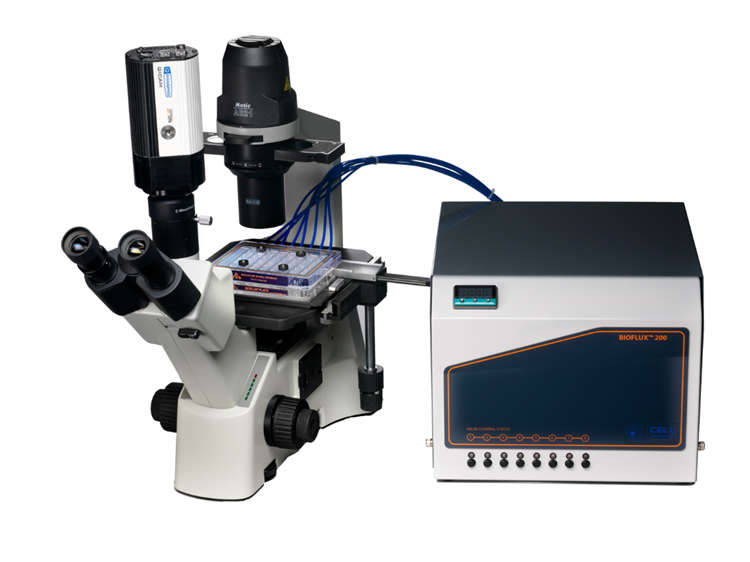
BioFlux system with microscope CMS logo

A BioFlux 200 shear flow system with an inverted microscope and high-speed camera.

Flow chamber assay capability comparison 

BioFlux vs DIY assay comparison

Conclusion

Adding shear flow to experiments greatly enhances the physiological relevance of cell-based assays; however, investigators should carefully consider the current and future needs of their experiments before purchasing or assembling a shear flow system. Taken together, these facts highlight the key advantages and disadvantages of both BioFlux shear flow systems and DIY flow cells.

Anson Blanks

Dr. Anson Blanks completed his BS in exercise physiology at East Carolina University and his MS in clinical exercise science at Appalachian State University. After working as a clinical exercise physiologist in cardiopulmonary rehabilitation, Dr. Blanks decided to pursue a career in scientific research. He attended Virginia Commonwealth University, where he completed his Ph.D. in Rehabilitation and Movement Science. After spending several years as a research and development scientist in biotechnology industry, Dr. Blanks is now a scientific marketing manager for Cell Microsystems in Durham, NC.

Related Posts

Unlocking the Secrets of Antibiotic Resistance: How Shear Flow Systems Are Revolutionizing the Fight Against Superbugs

In the ongoing battle against antibiotic-resistant bacteria, or “superbugs,” scientists are constantly seeking innovative tools to understand the mechanisms of resistance and develop effective treatments. One such groundbreaking technology is shear flow systems, which have emerged as game-changers in microbiological research. By simulating the dynamic conditions of bacteria’s natural environments, such as the human body or food processing, shear flow systems provide unique insights into bacterial behavior and resistance mechanisms that traditional static methods simply cannot achieve. In this blog post, we’ll explore the benefits of using shear flow systems to combat antibiotic resistance and develop next-generation therapies.

Why Shear Flow Systems Are Essential for Studying Antibiotic Resistance

Antibiotic resistance is a complex phenomenon influenced by a variety of factors, including genetic mutations, horizontal gene transfer, and the formation of biofilms. Traditional laboratory methods often fail to capture the dynamic nature of these processes, leading to incomplete or misleading results. Shear flow systems address this limitation by providing a more realistic environment for bacterial growth and interaction. Here’s how:

1. Mimicking Real-World Conditions

In the human body, bacteria are rarely in a static state. They are constantly exposed to fluid flow, such as blood circulation or urine flow, which influences their behavior and resistance mechanisms. Shear flow systems can replicate these conditions, allowing researchers to study how bacteria respond to antibiotics under realistic physiological conditions. This is critical for understanding how resistance develops and persists in vivo. This benefit was recently highlighted in a webinar presented by Dr. Katharina Richter, a microbiology researcher from the University of Adelaide in Australia. Using a high-throughput BioFlux Shear Flow System, Dr. Richter and her team were able to test 3 different methods of superbug treatments under physiological conditions.

2. Studying Biofilm Formation and Resistance

Biofilms—structured communities of bacteria encased in a protective matrix—are a major contributor to antibiotic resistance. Biofilms are notoriously difficult to treat because they shield bacteria from antibiotics and the immune system. Shear flow systems enable researchers to study biofilm formation in real time, observing how bacteria adhere to surfaces, form microcolonies, and develop resistance under flow conditions. For example, using a BioFlux, Dr. Richter was able to leverage high-resolution imaging to obtain unprecedented insight into the biofilm killing and prevention efficacy of a copper and diethyldithiocarbamate (DDC) combination nanoparticles¹. The group is currently investigating the use of a Cu-DDC infused gel that can be injected into wounds that are at high risk for chronic infection, such as hernia.

From Milliliters to Microliters: How a Shear Flow System Can Reduce Sample Requirements for Experiments

Imagine working with a rare patient-derived cell samples. In a traditional setup, you might need 1 milliliter of sample (equivalent to about 20 drops) to run an experiment. With a microfluidic system, you could potentially get the same results with just 10 microliters (about one-half of a single drop). This efficiency opens up entirely new research possibilities, especially in fields where sample availability is a limiting factor.

Whether due to rarity, cost, or difficulty in obtaining samples, the ability to conduct meaningful experiments with limited sample volumes has long been a goal in biological and chemical research. In this quest for more efficient and precise laboratory techniques, microfluidic shear flow systems have emerged as game-changing tools. These systems are not only reducing the amount of sample required for experiments but are also proving their versatility across a wide range of sample types.

Sample volume

Traditional experimental setups, including static and non-microfluidic shear flow, often demand significant amounts of material, which can be both costly and impractical. This is especially true when working with precious or limited samples such as rare biological specimens, expensive chemicals, or newly synthesized compounds. Enter microfluidic shear flow systems – an elegant solution that’s revolutionizing how investigators approach assays. These miniaturized platforms are proving invaluable across multiple disciplines by dramatically reducing sample requirements from milliliters down to microliters, while maintaining experimental integrity. This up to 1000-fold reduction in sample volume is particularly crucial when working with substances, such as patient-derived cells or novel pharmaceuticals. By significantly reducing the volume of reagents and samples needed, these systems cut costs and make experiments more sustainable.

Sample versatility

Equally as impressive as their sample and reagent reduction ability, is the versatility of microfluidic shear flow systems to adapt to different types of samples.

  • Human Samples: Researchers can study cellular behavior under controlled shear stress, mimicking physiological conditions such as blood or saliva flow.
  • Nanomaterials: The precise fluid dynamics in these systems allow for the uniform dispersion and manipulation of nanoparticles, enabling high-resolution studies in materials science.
  • Microbes: Continuous fluid flow more closely represents the natural environments of many microbes, such as plumbing, food processing, and chronic wounds.

The ability to work with multiple sample types in the same system allows researchers to explore different experimental conditions without the need for multiple specialized setups. By precisely controlling channel geometries and flow rates, researchers can subject different sample types to well-defined shear conditions, enabling detailed studies of cellular mechanics, protein interactions, and material properties.

Microfluidic…
Single Cells: Lab Tune Sung to the Rhythm of "Jingle Bells"

By Jessica Hartman, Ph.D.

Toiling in the lab

With a deadline on its way

To the scope I go

On a Saturday

I don’t see a clone

I’ve looked for one that’s right

What misery these data bring,

I’ll have to look all night,

Oh! Single cells, single cells, dilutions aren’t the way

Oh, I wish I had an AIR to pick a clone, to-da-ay!

Single cells, single cells, I need a better way

Use a Raft to grow a clone or be sad this holiday!

Use a Raft to grow a clone or be sad this holiday!

Now it’s getting late

My spirits are so low

My PI will hate

If my cells don’t grow

My eyesight’s getting dim

A clone I cannot see

My chances are so slim

I need CellRaft Cytometry

Oh! Single cells, single cells, sorters aren’t the way

Oh, I wish I had an AIR to pick a clone, to-da-ay!

Single cells, single cells, I need a better way

Use a Raft to grow a clone or be sad this holiday!

Use a Raft to grow a clone or be sad this holiday!

Oh! Single cells, single cells, dispensers aren’t the way

Oh, I wish I had an AIR to pick a clone, to-da-ay!

Single cells, single cells, I need a better way

Use a Raft to grow a clone or be sad this holiday!

Use a Raft to grow a clone or be sad this holiday!


 “Single Cell” vocalist: Virginia Laurie

Jessica Hartman, Ph.D.Senior Director of Product Applications | jessica.hartman@cellmicrosystems.comDr. Jessica Hartman has a B.S in Biology from the University…